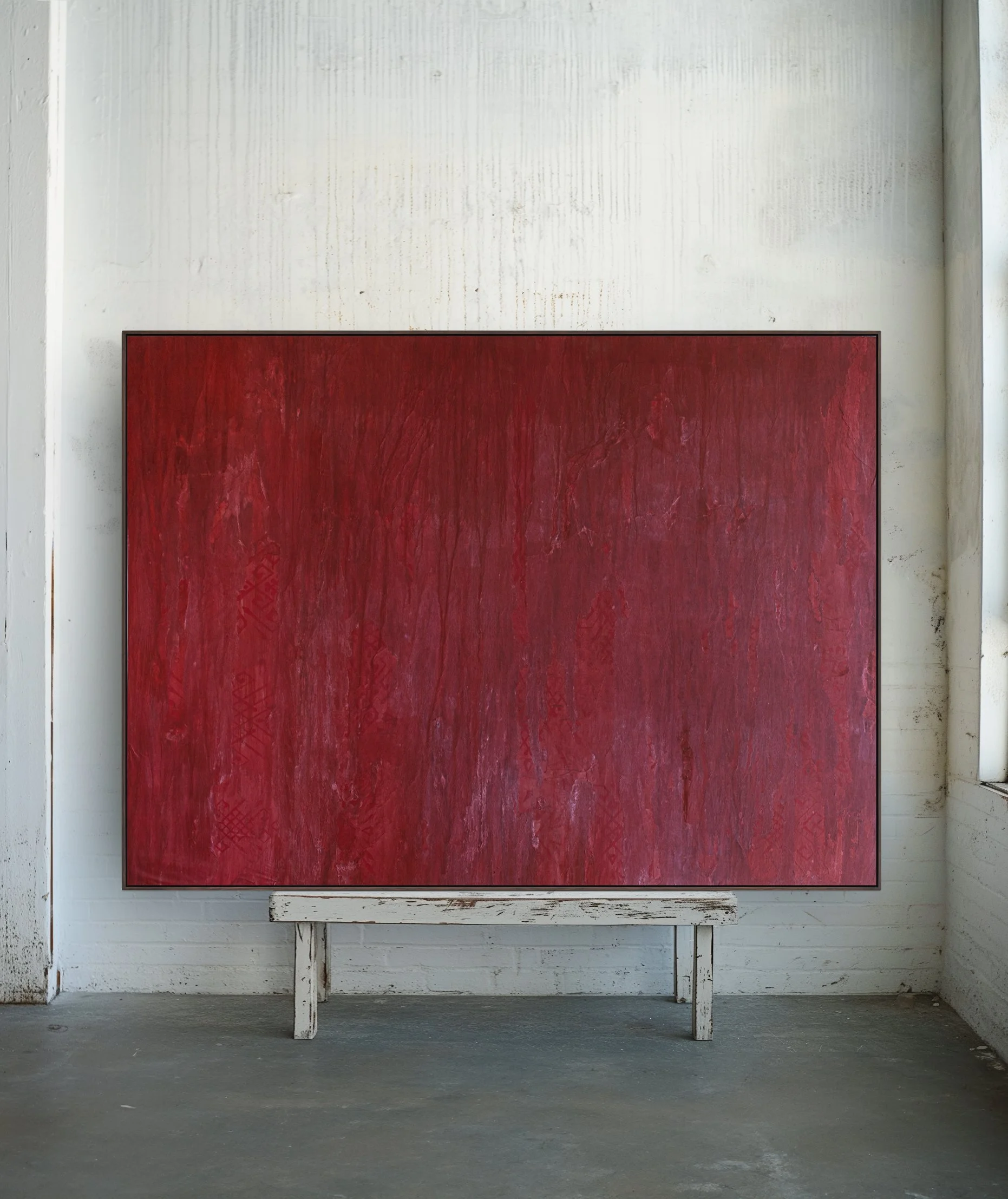
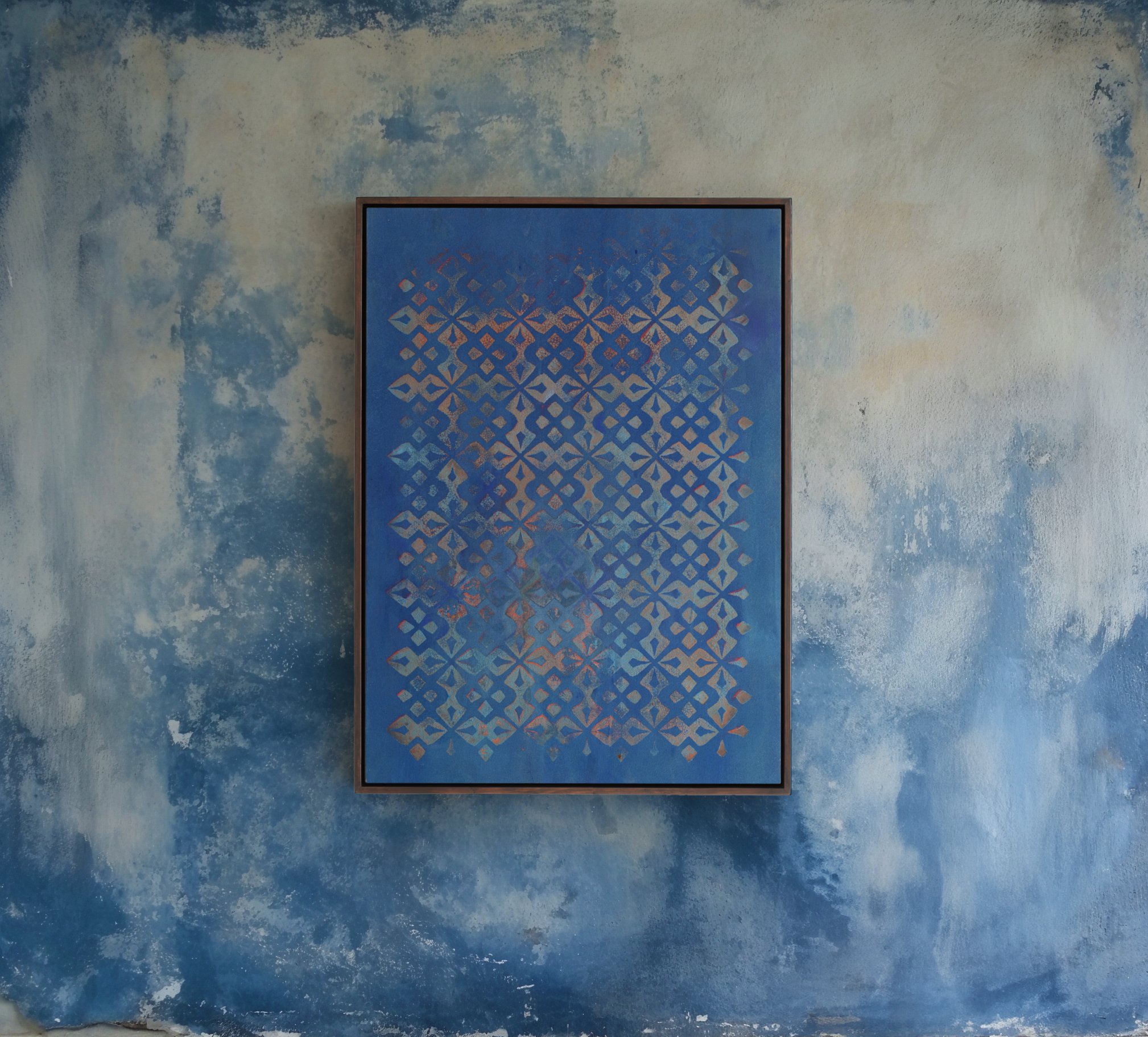
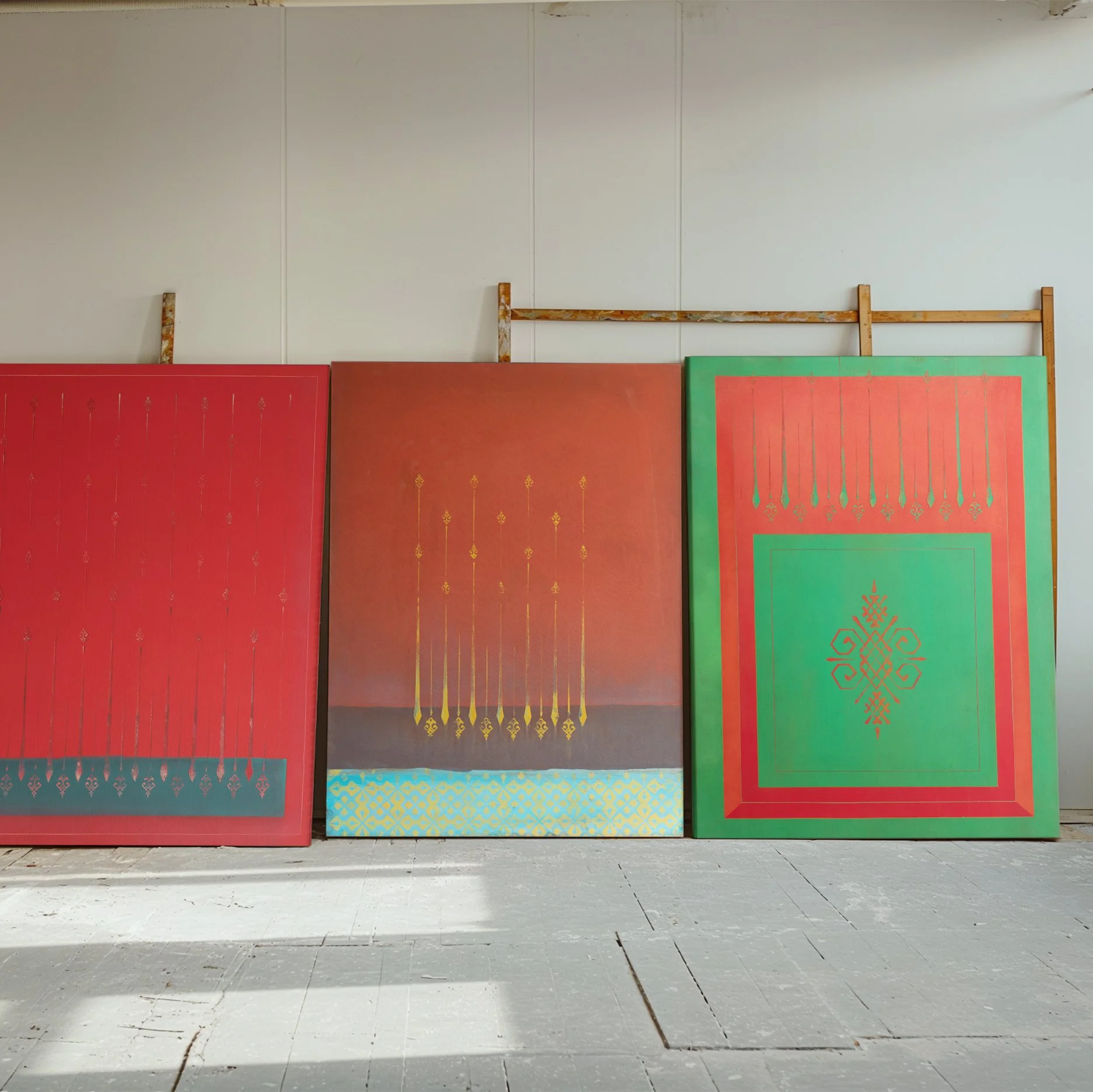
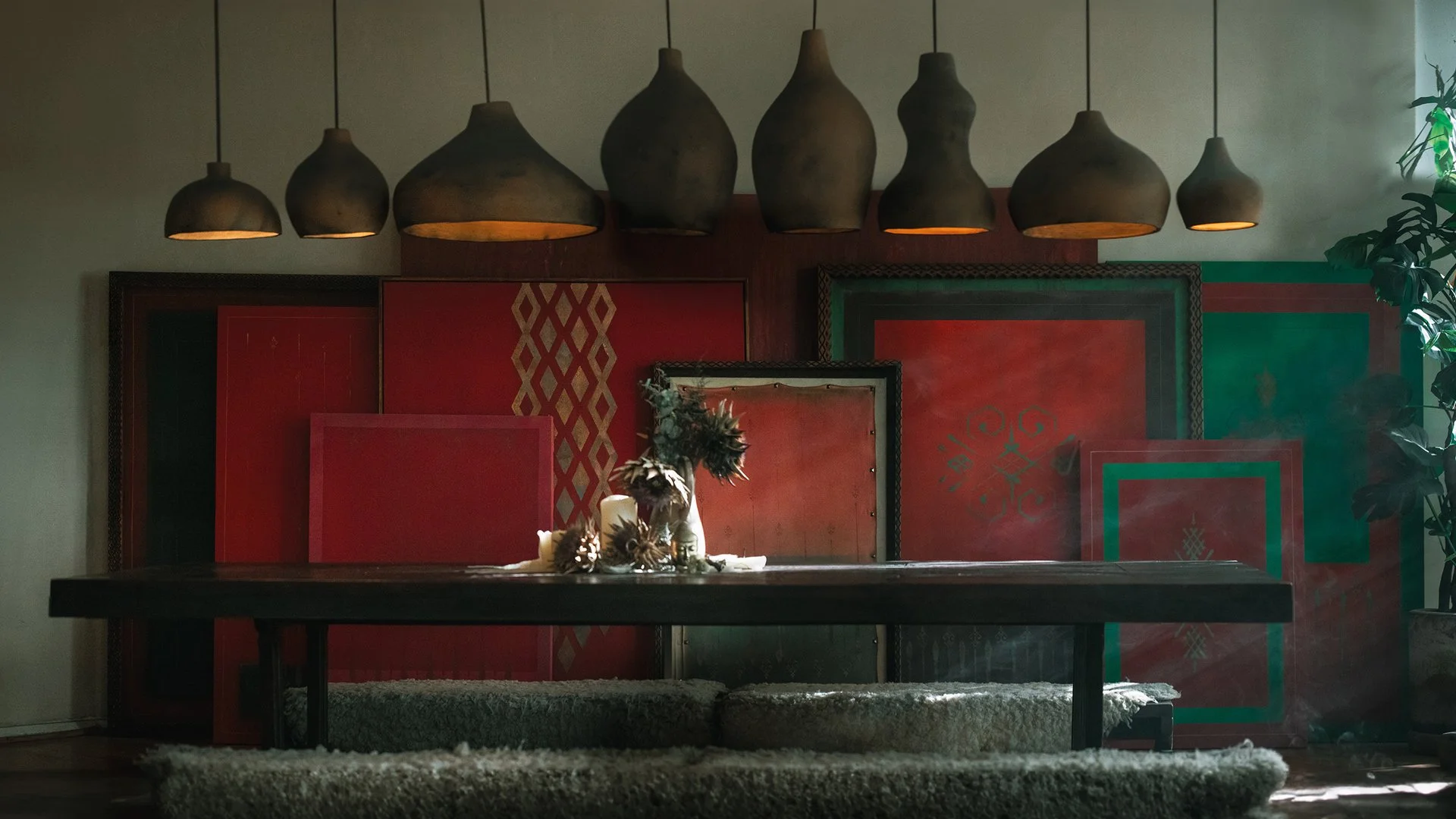
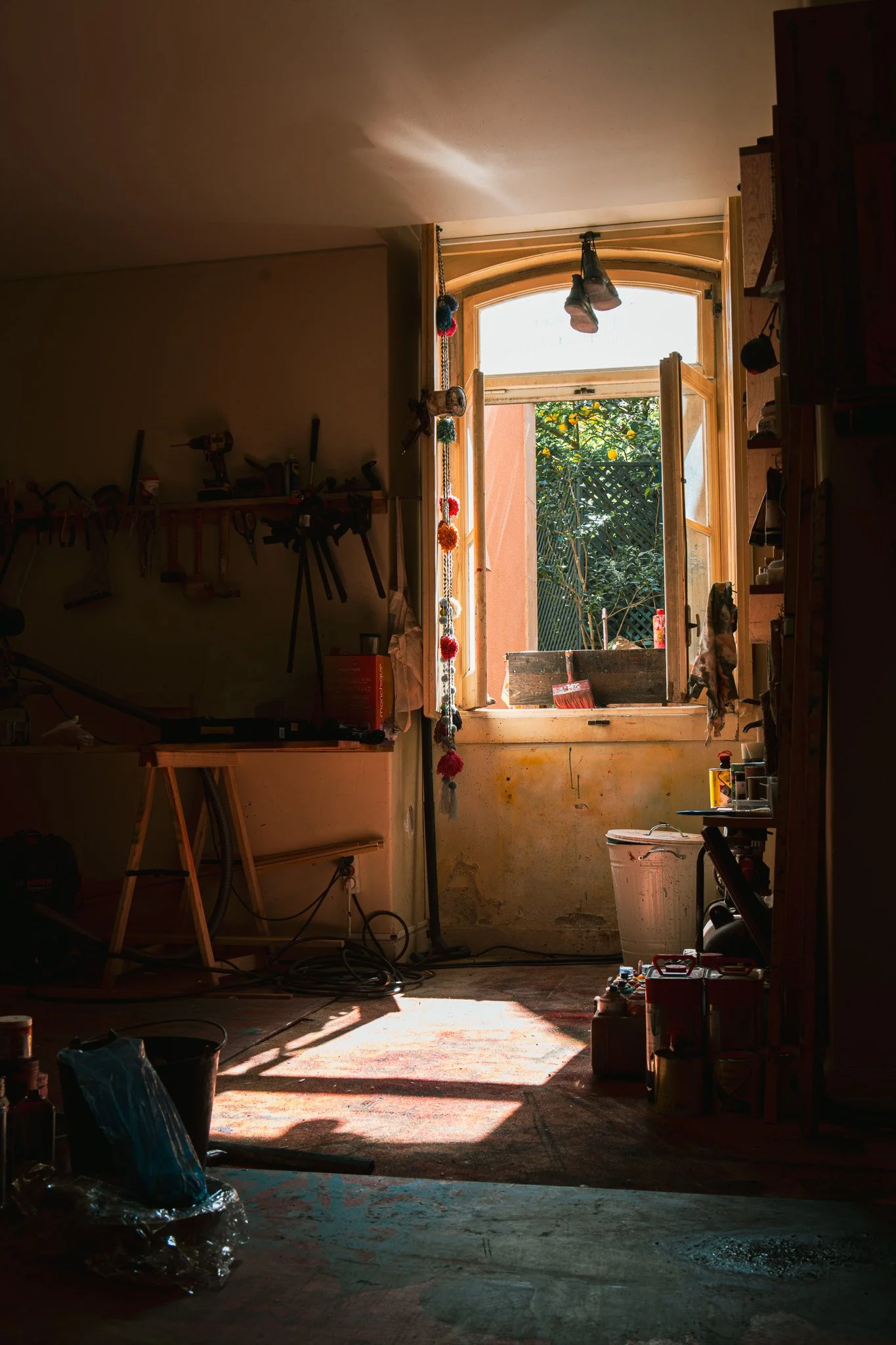
I painted this collection while I was moving. Mexico City to Lisbon, the chaos of adapting to a new landscape, a new light. I set up the studio in a small garden and watched the seasons pass through the window while I worked.
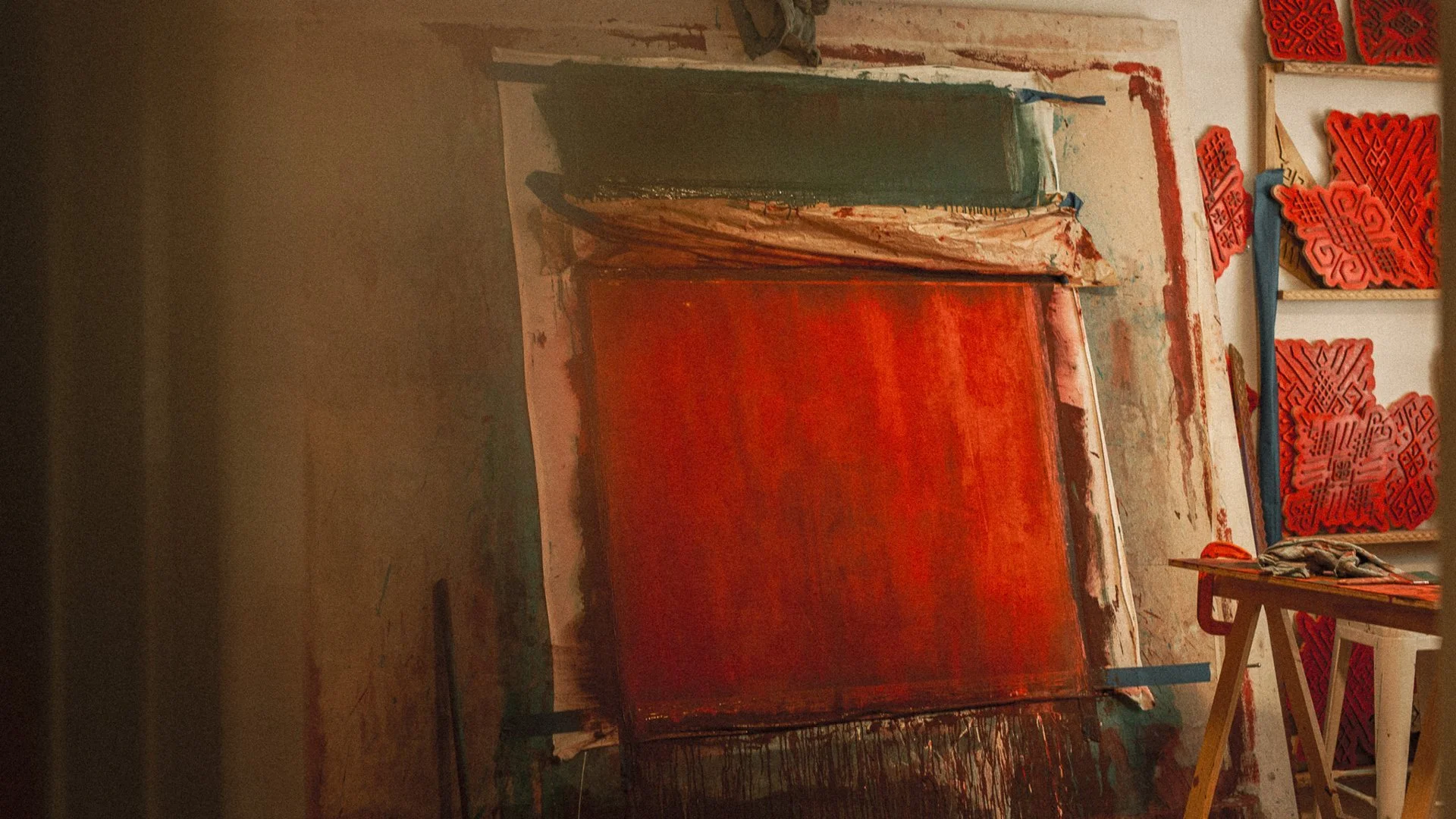
I start the ground as dark as I can. Then I work back towards the light.
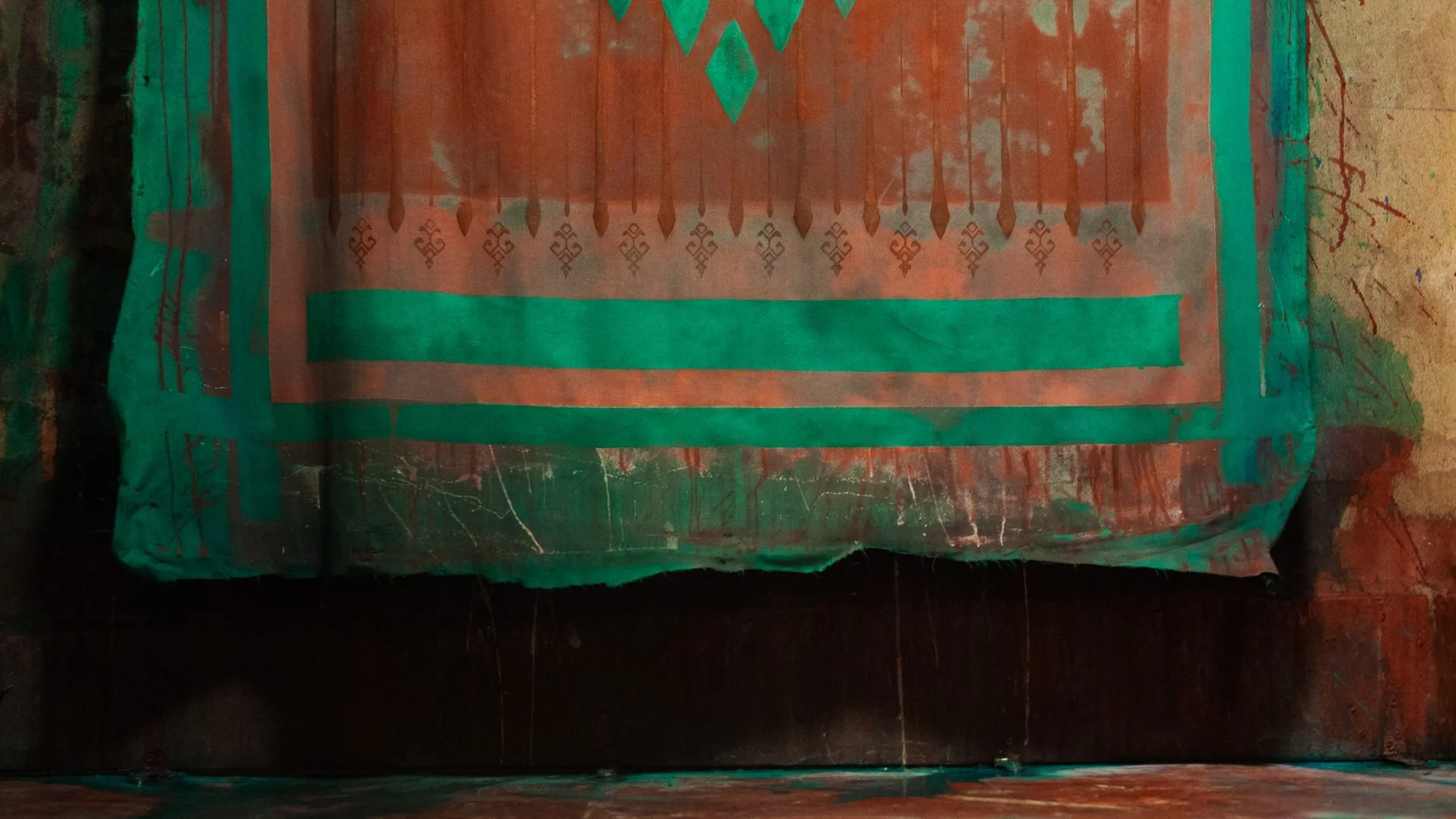
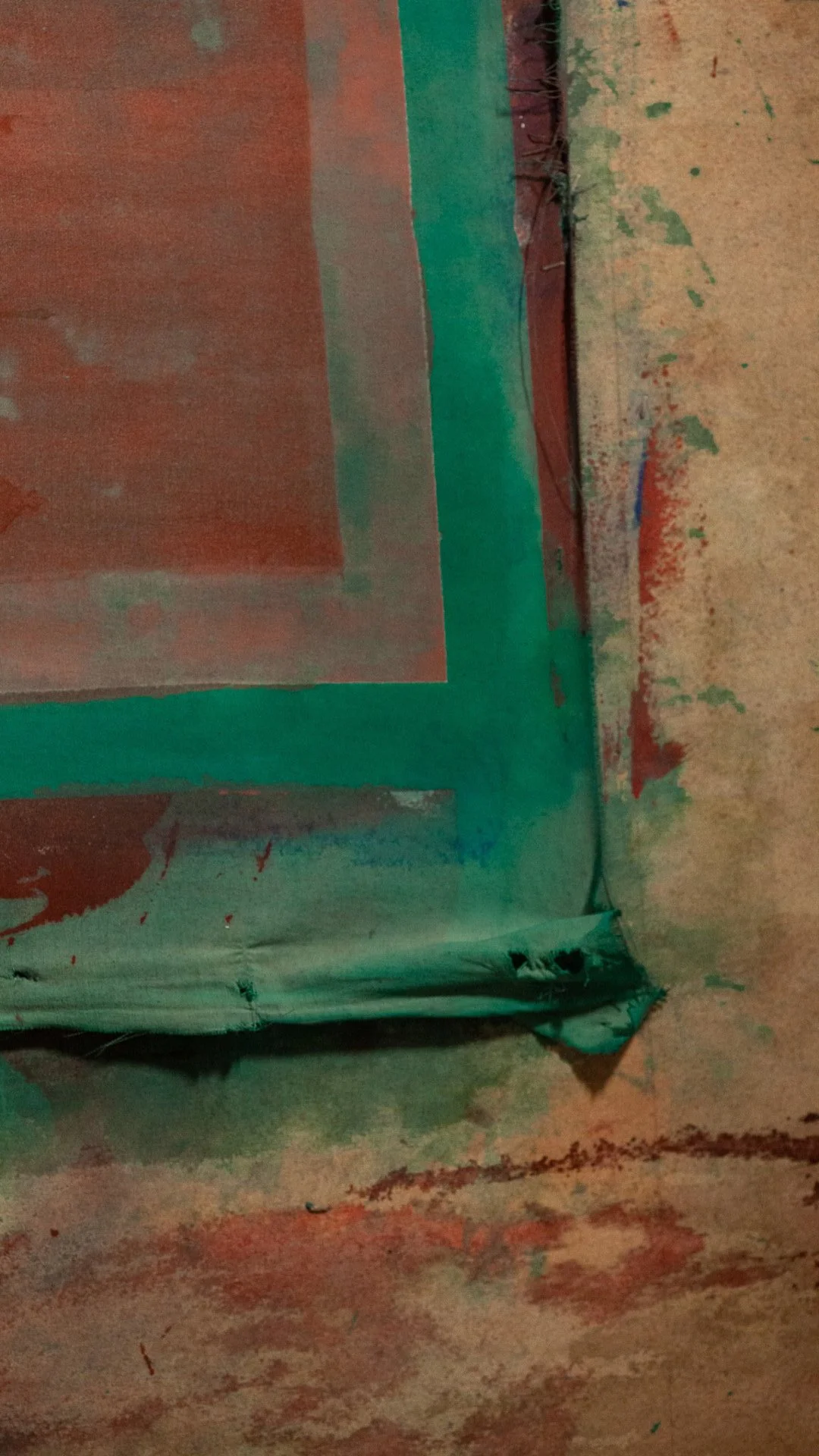
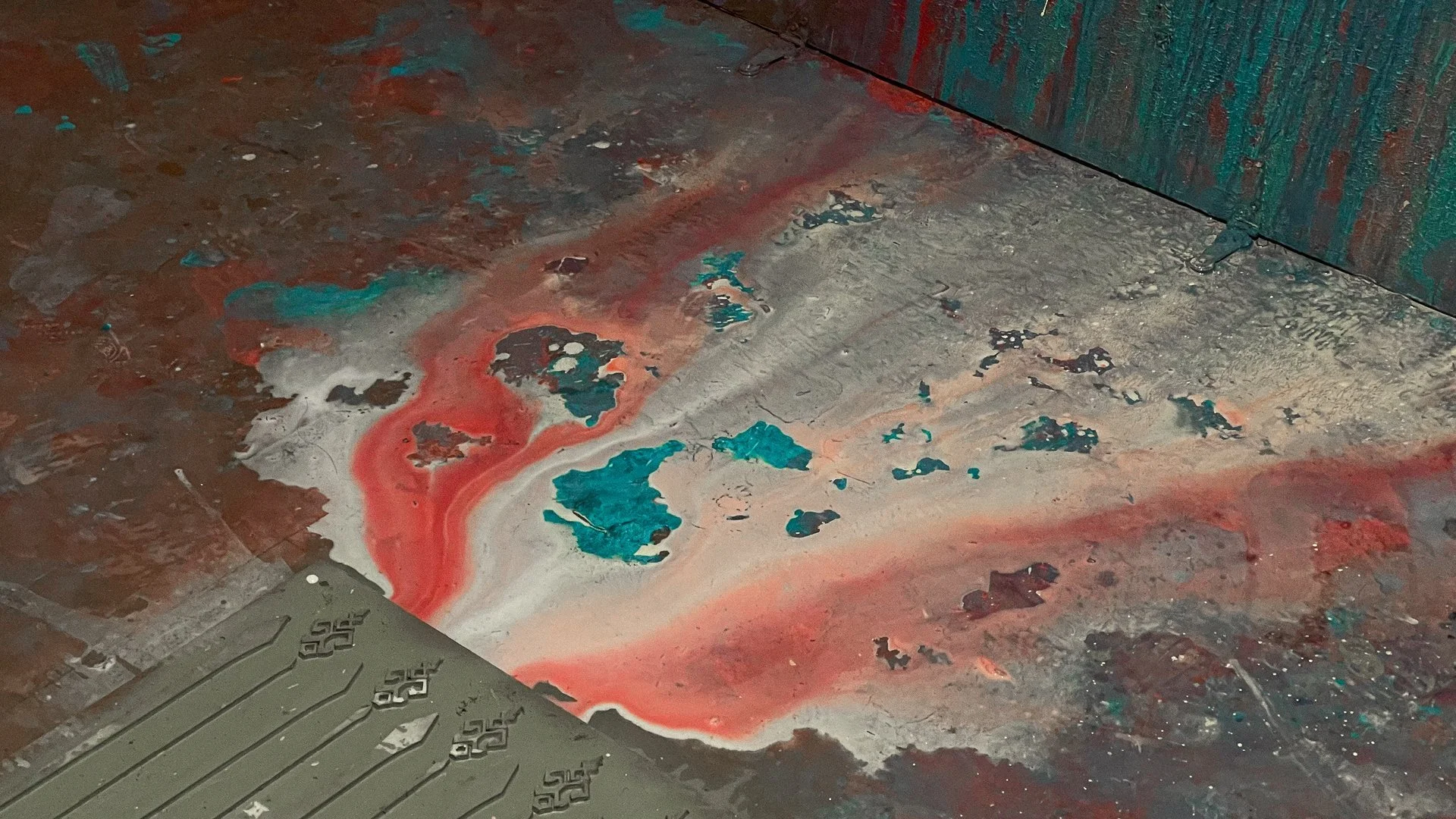
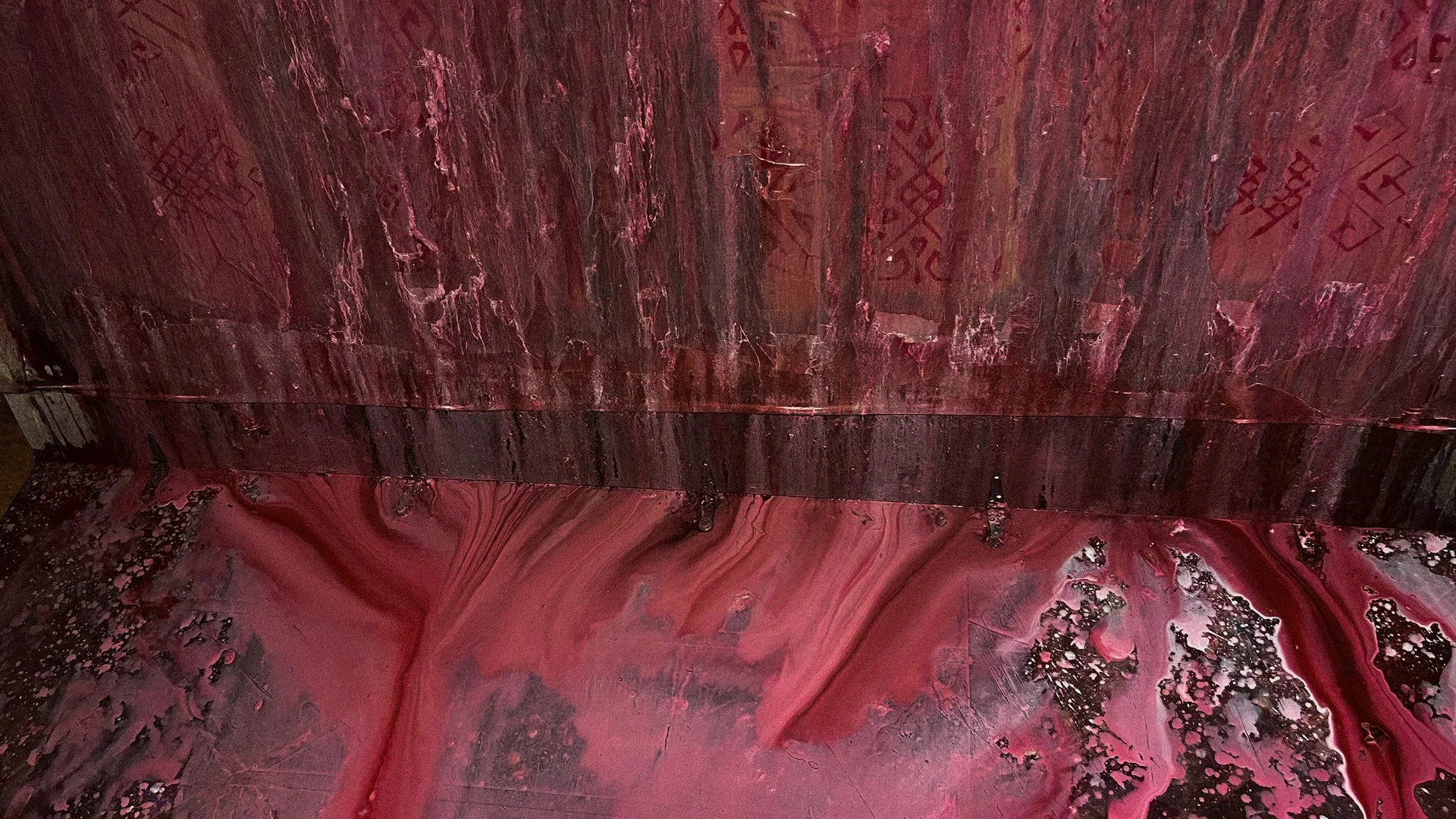
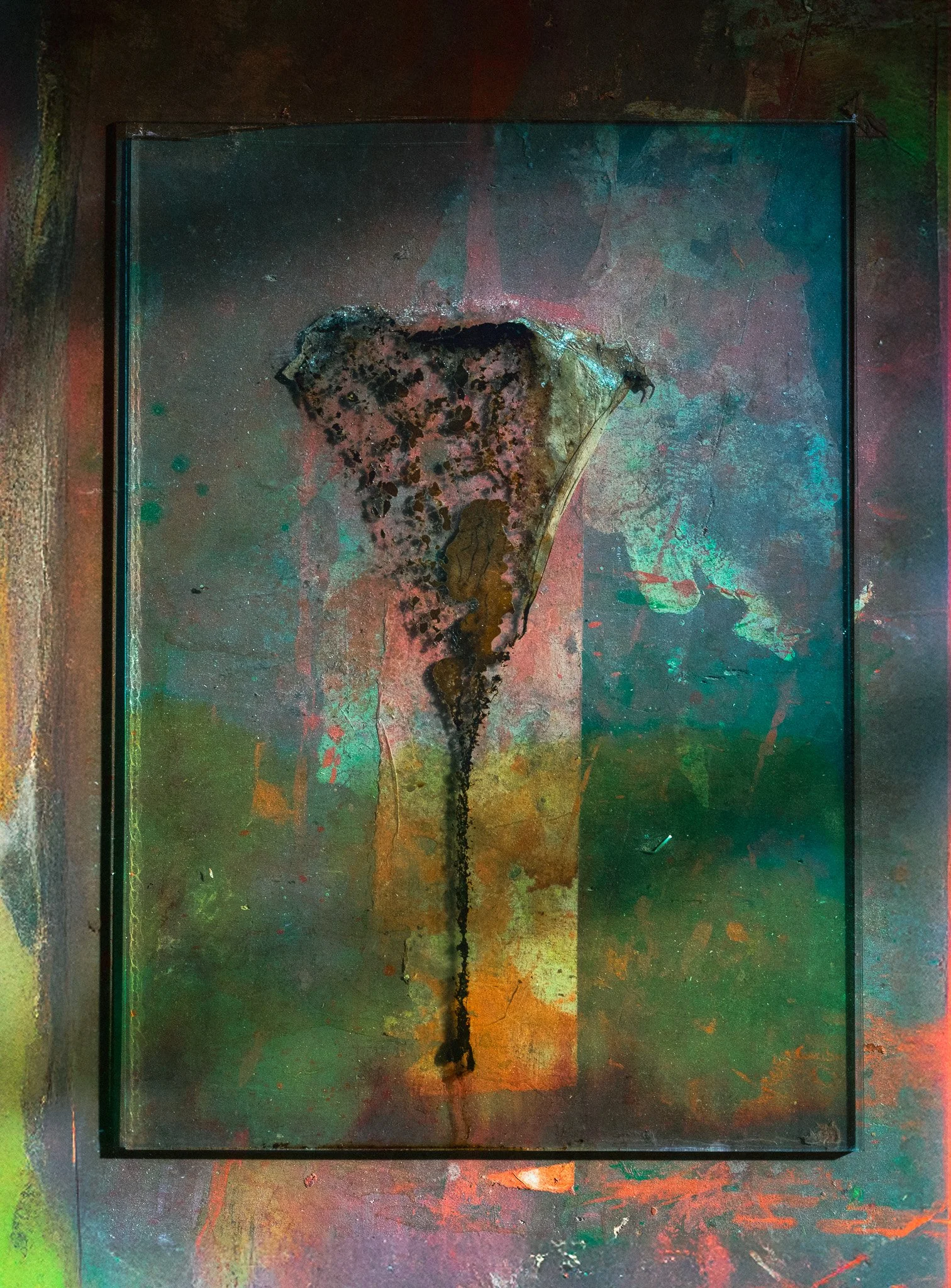
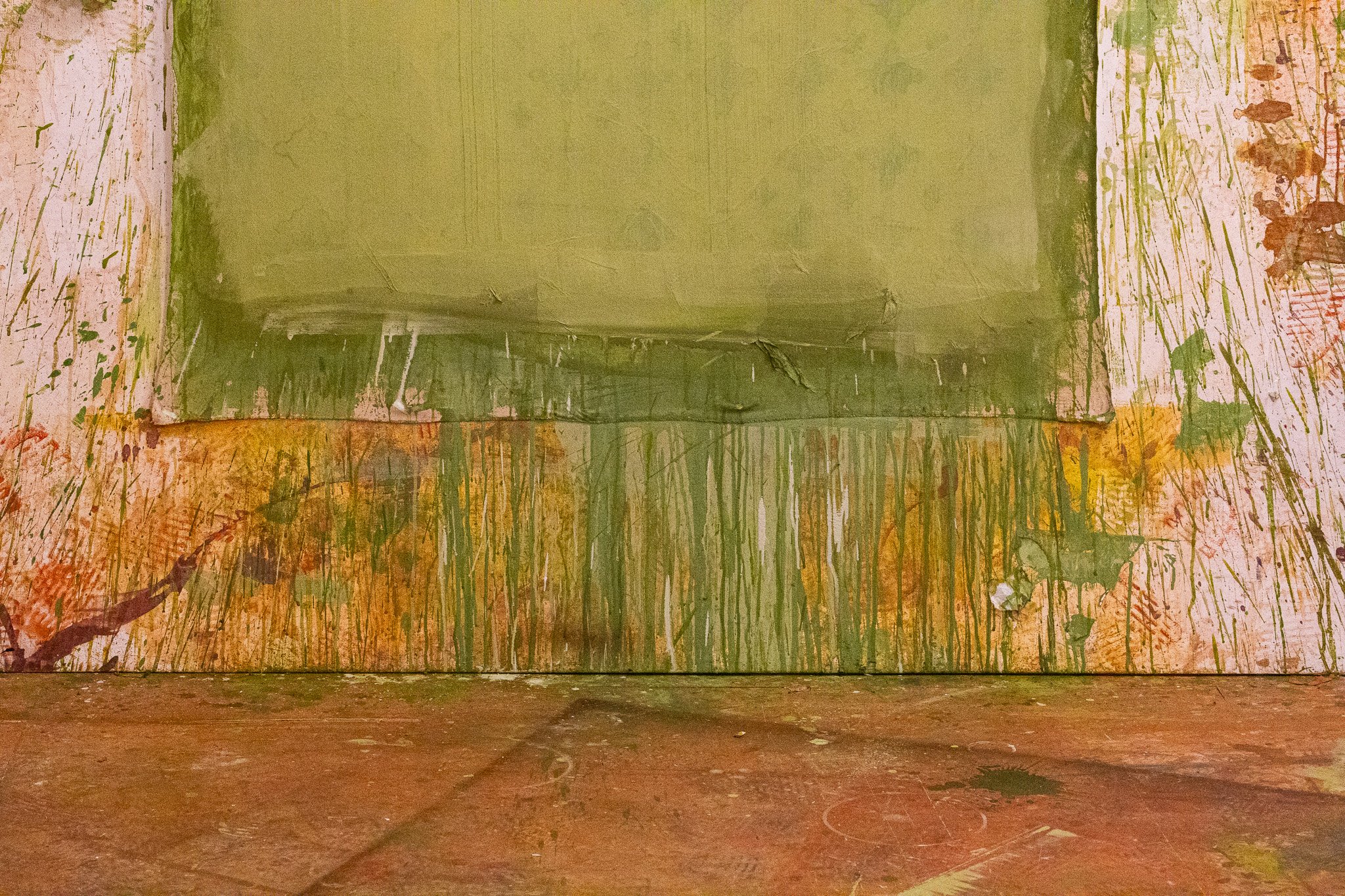
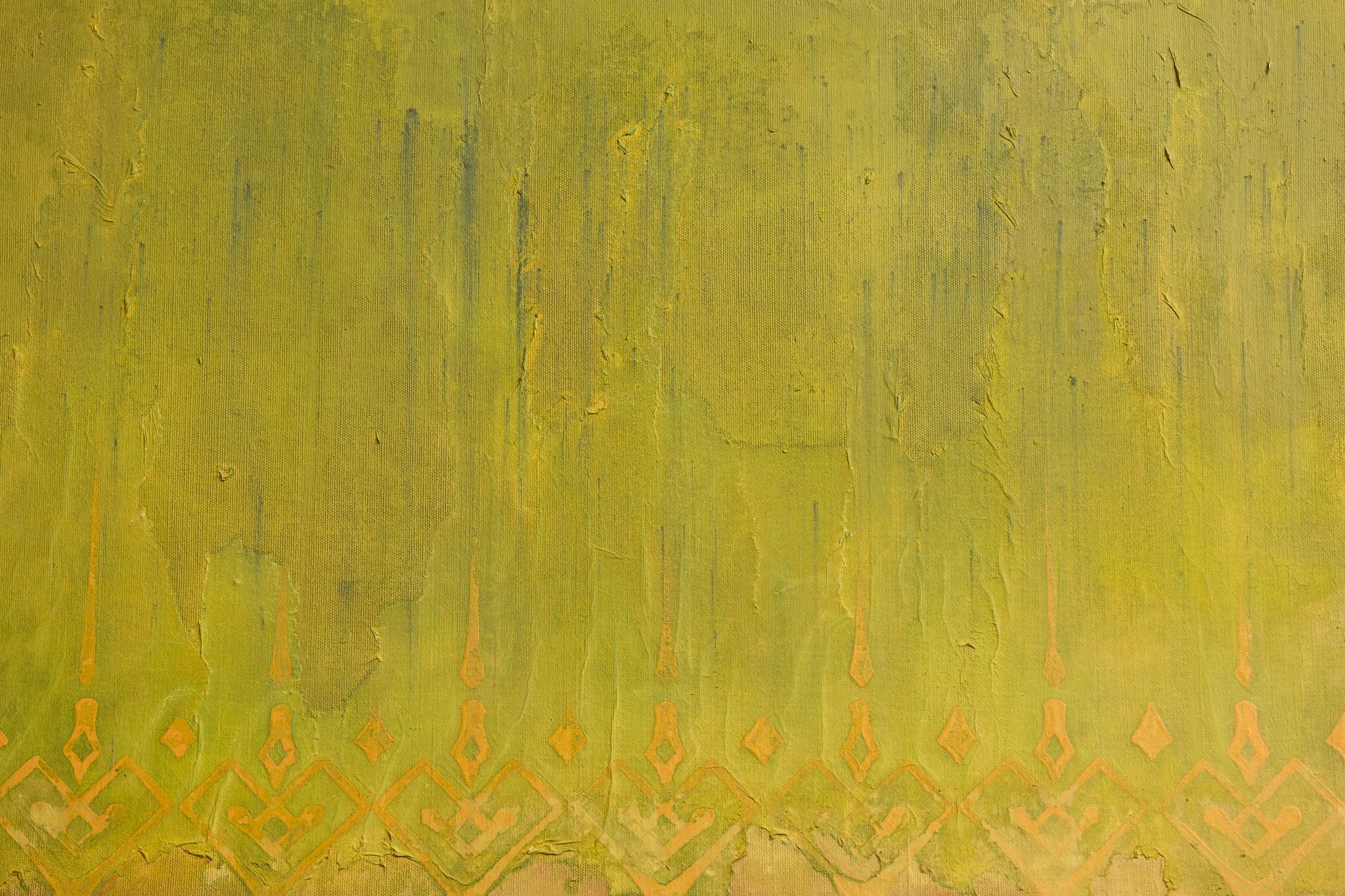
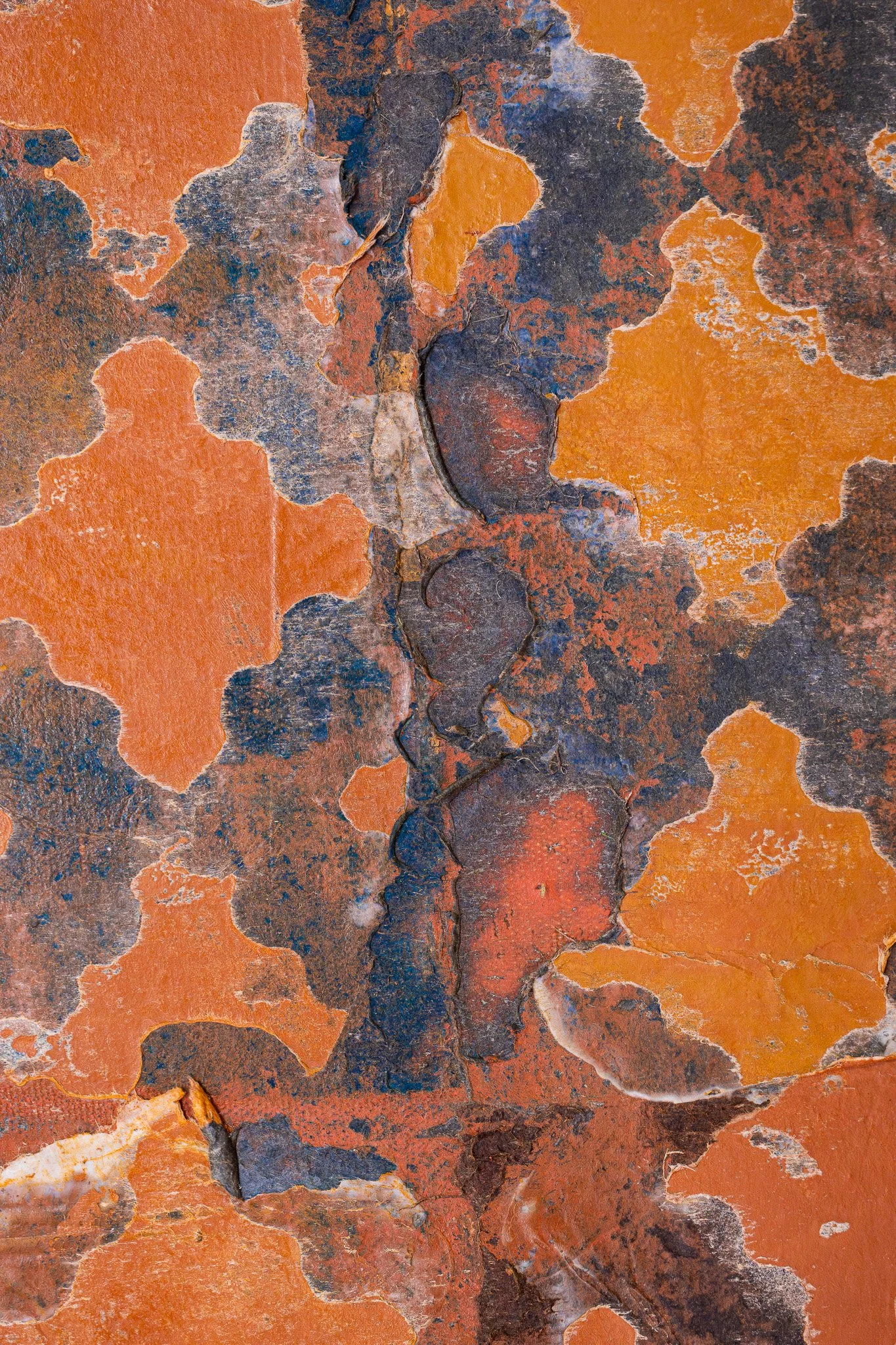
The canvas gets flooded. Water, soap, pigment, more water. I love it when the water is dirty, it keeps things rough, and it stops me controlling the outcome. Washing a piece down is how I let something go.
Some pigments take longer to diffuse, so while the surface is still cooking, I scrape back into it and force the drip. I call that the melancholia of the tears.
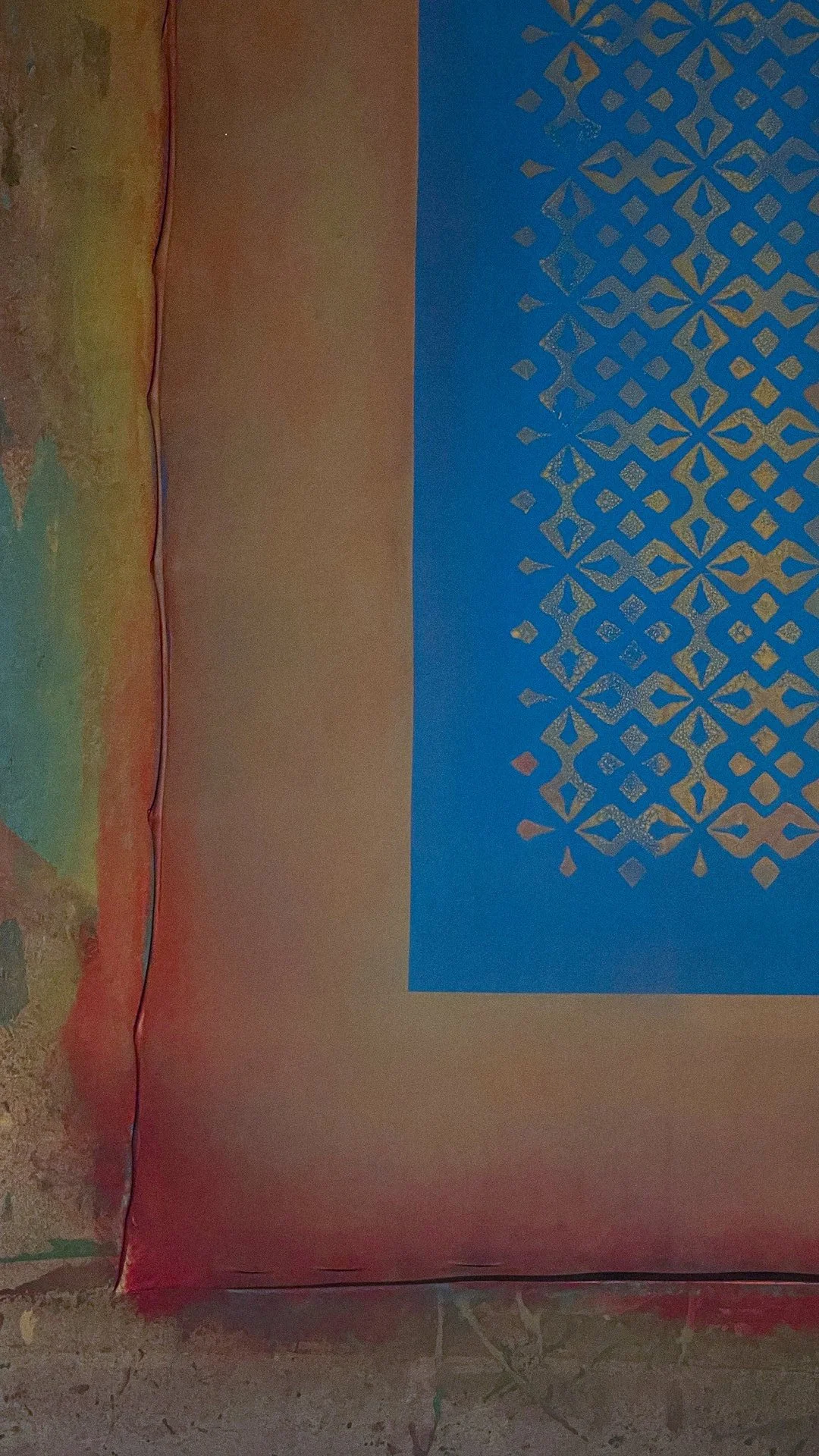
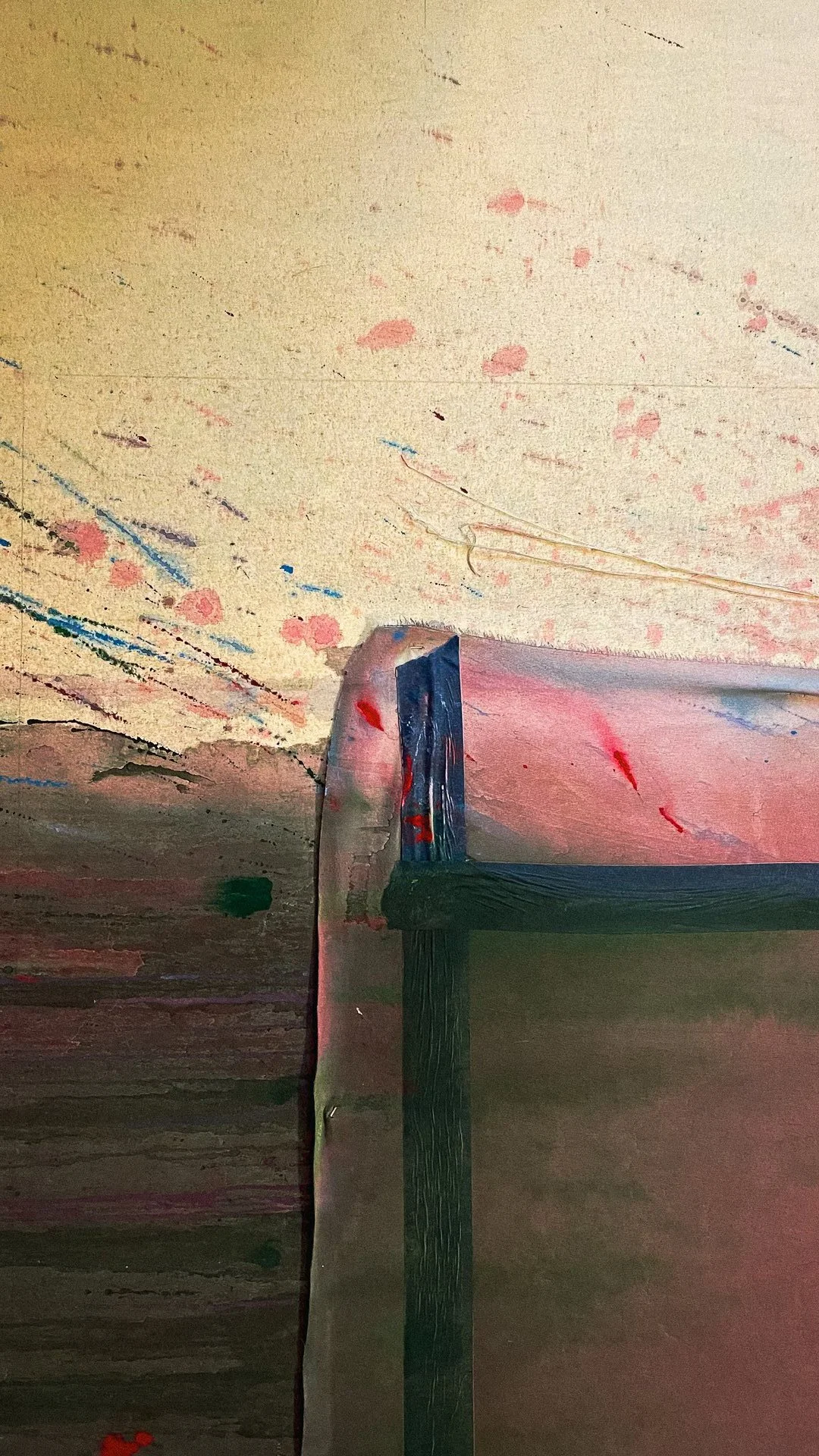
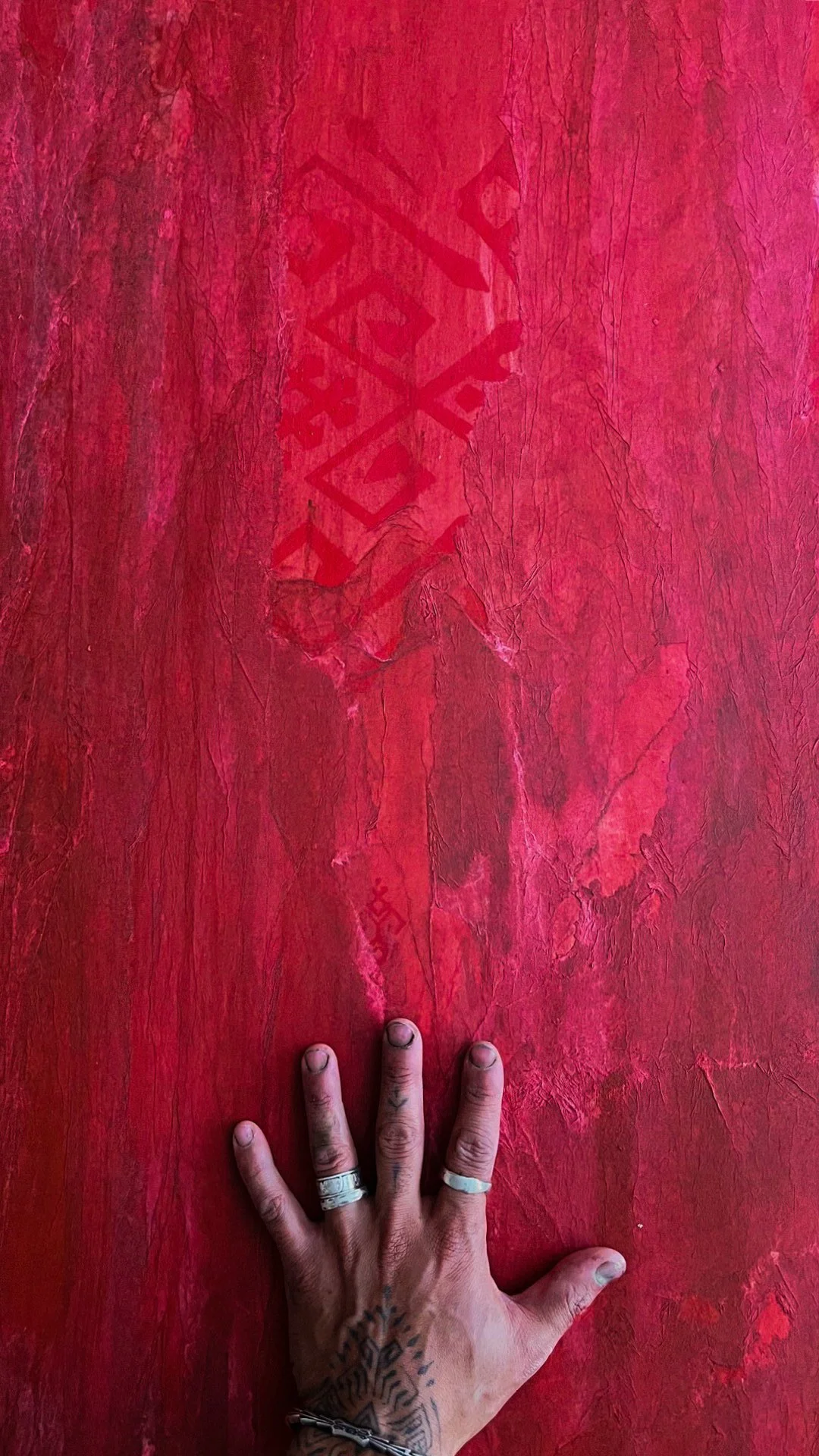
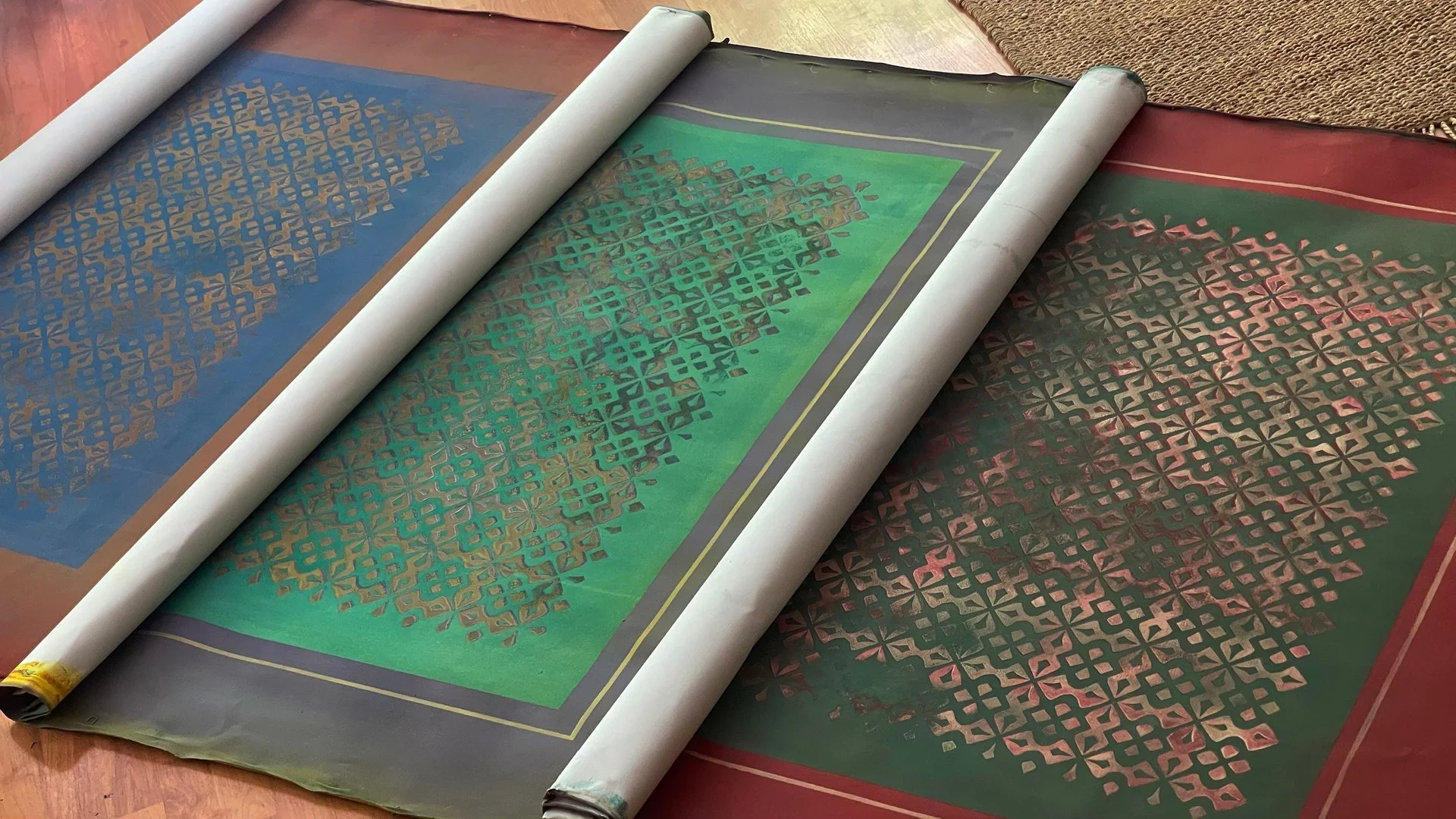
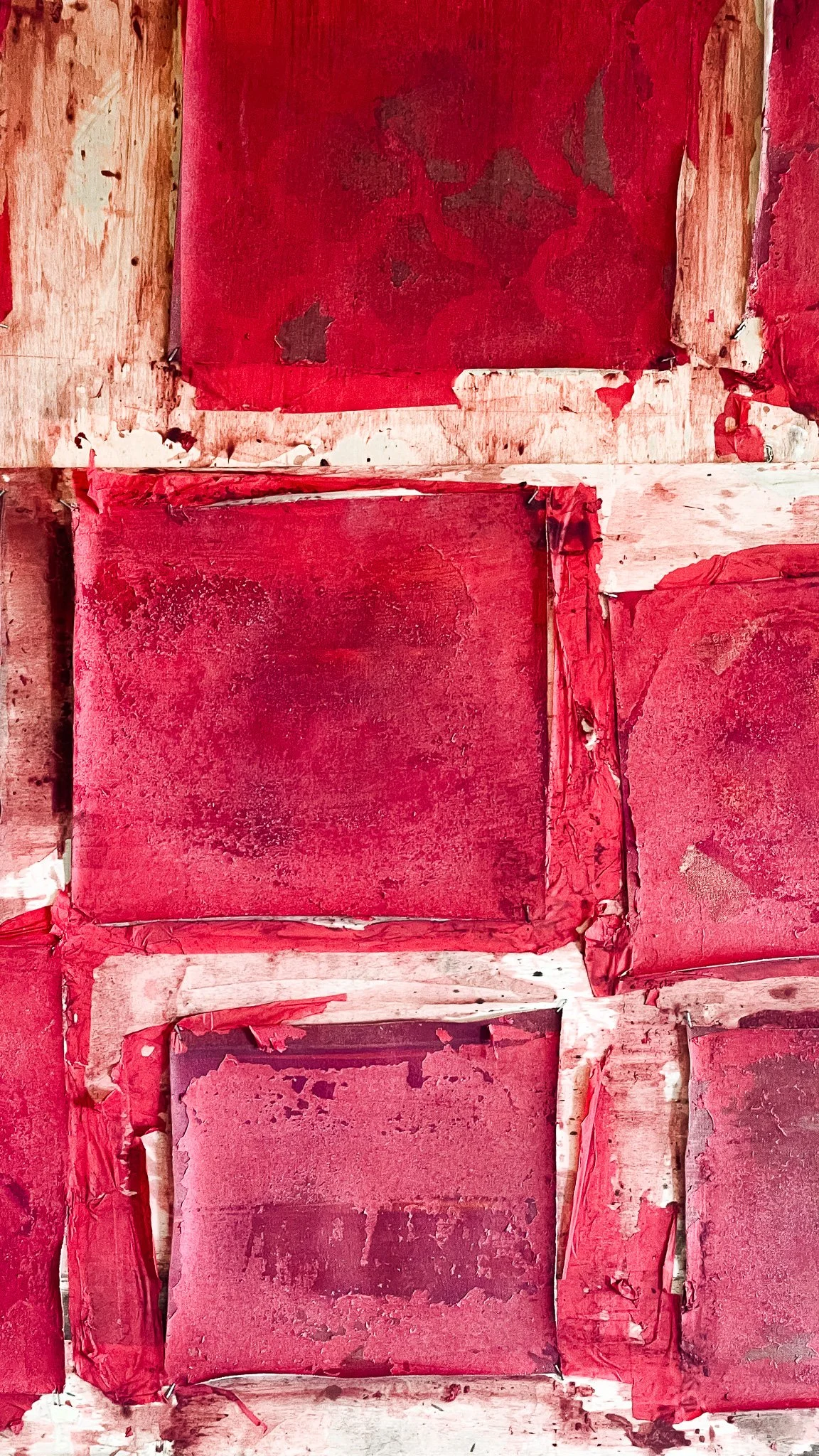
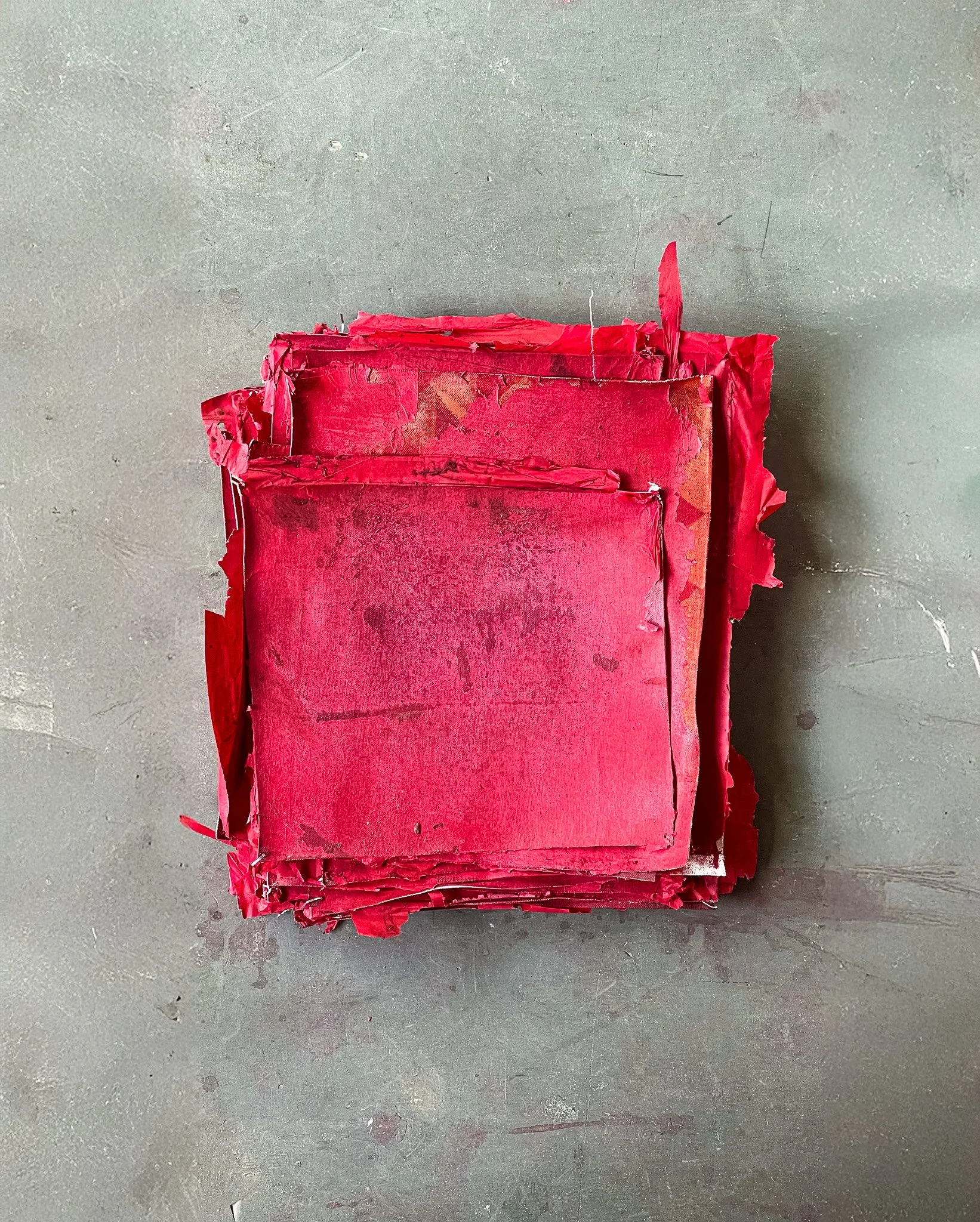
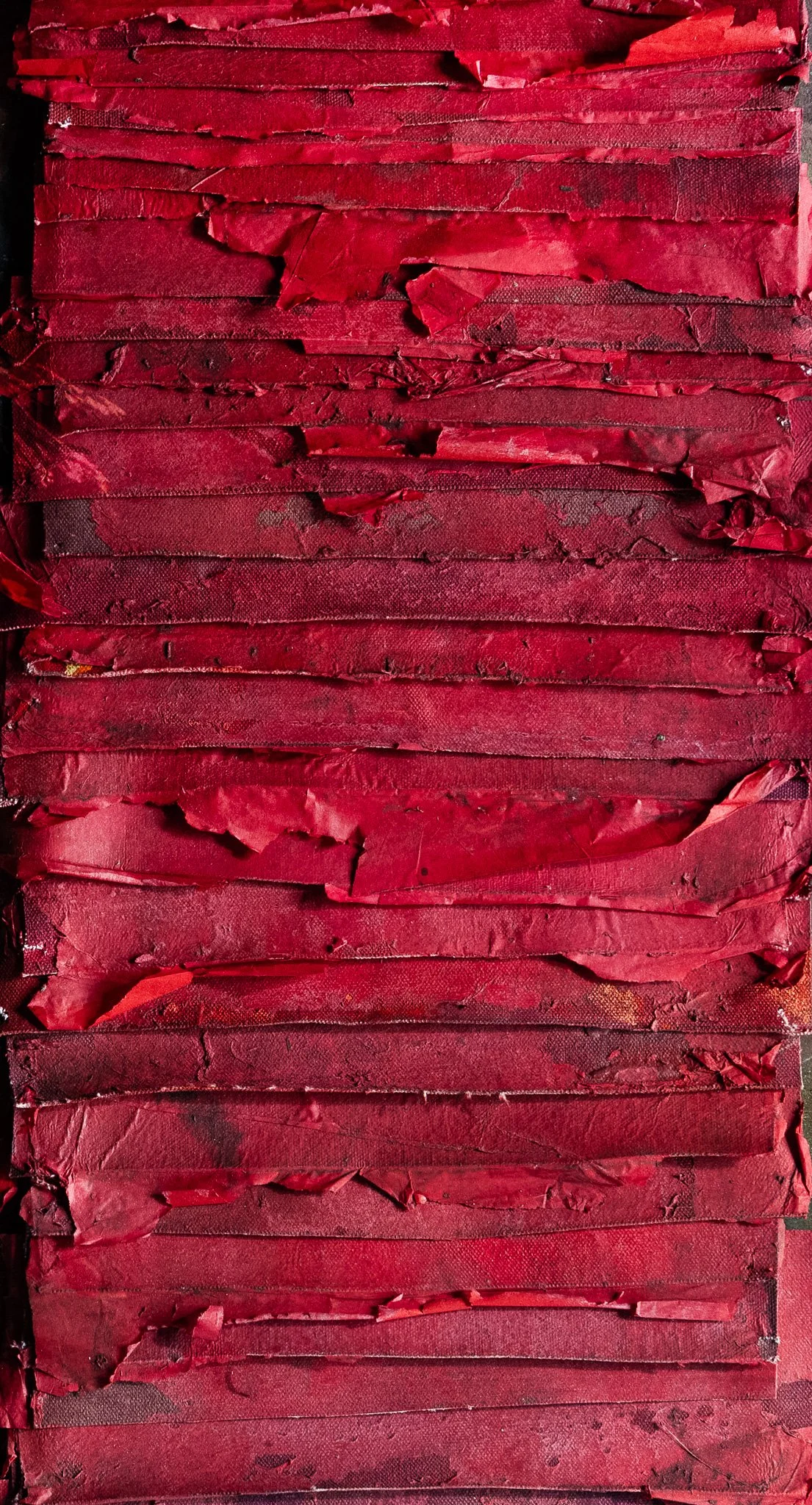
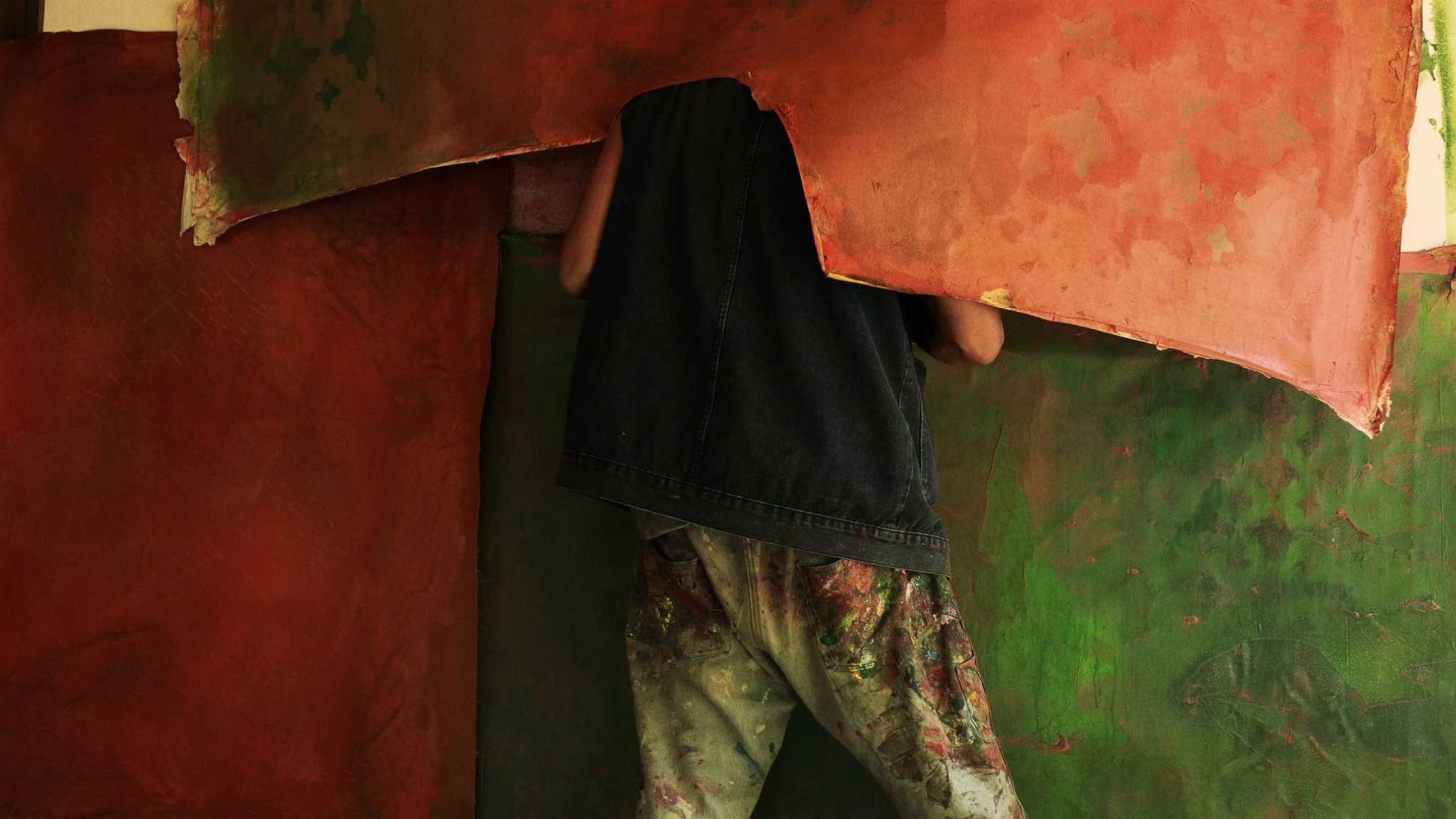
Then the rice paper. Printed with oil, laid over, torn, melted, relaid.
The last move is always the risky one. I call it the surgery: Seconds to move the paper before it breaks. I risk everything.
Indigo, urucum, brass nails, cotton and jute woven in Brazil and Mexico. Hands, mostly.
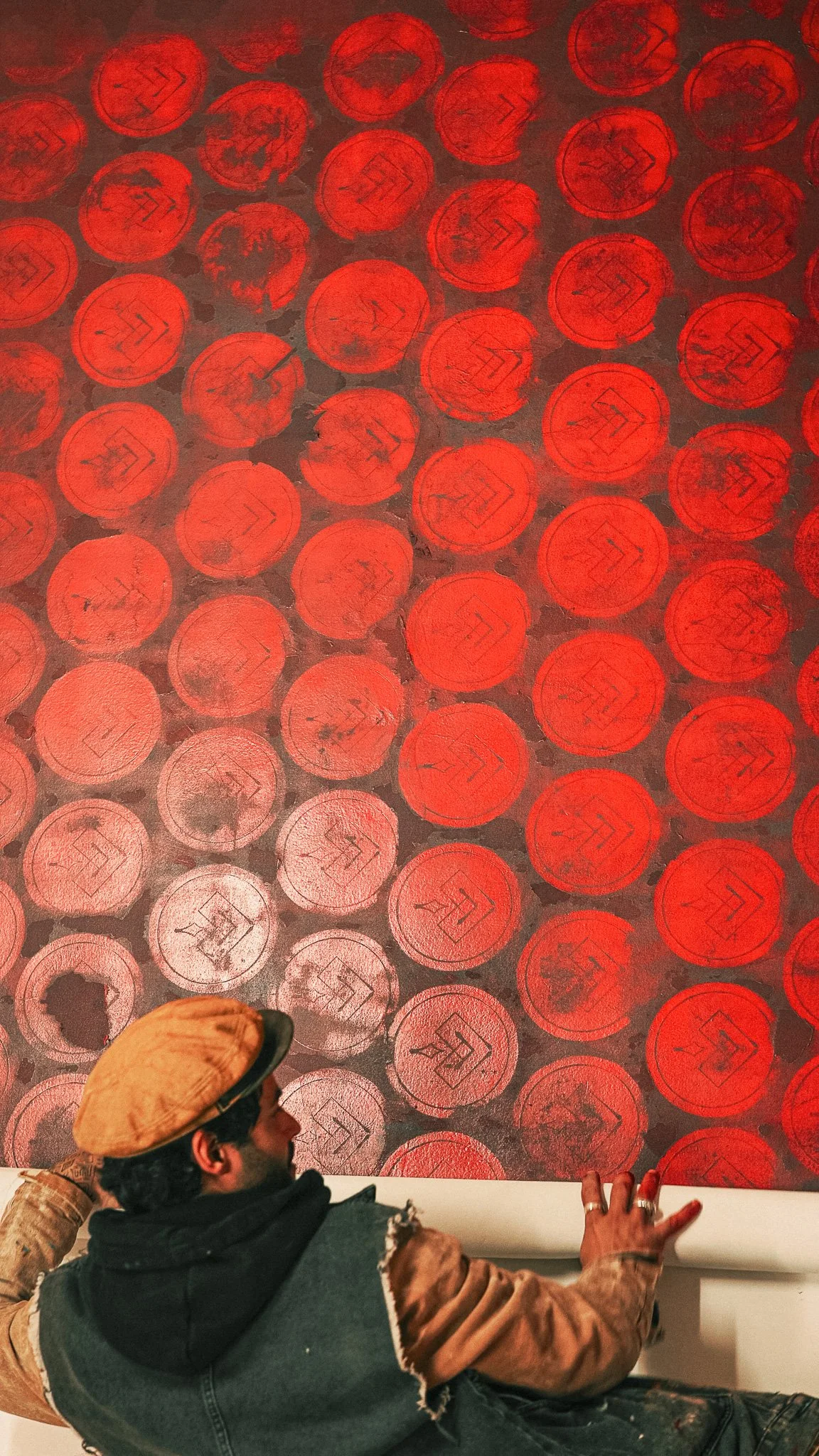
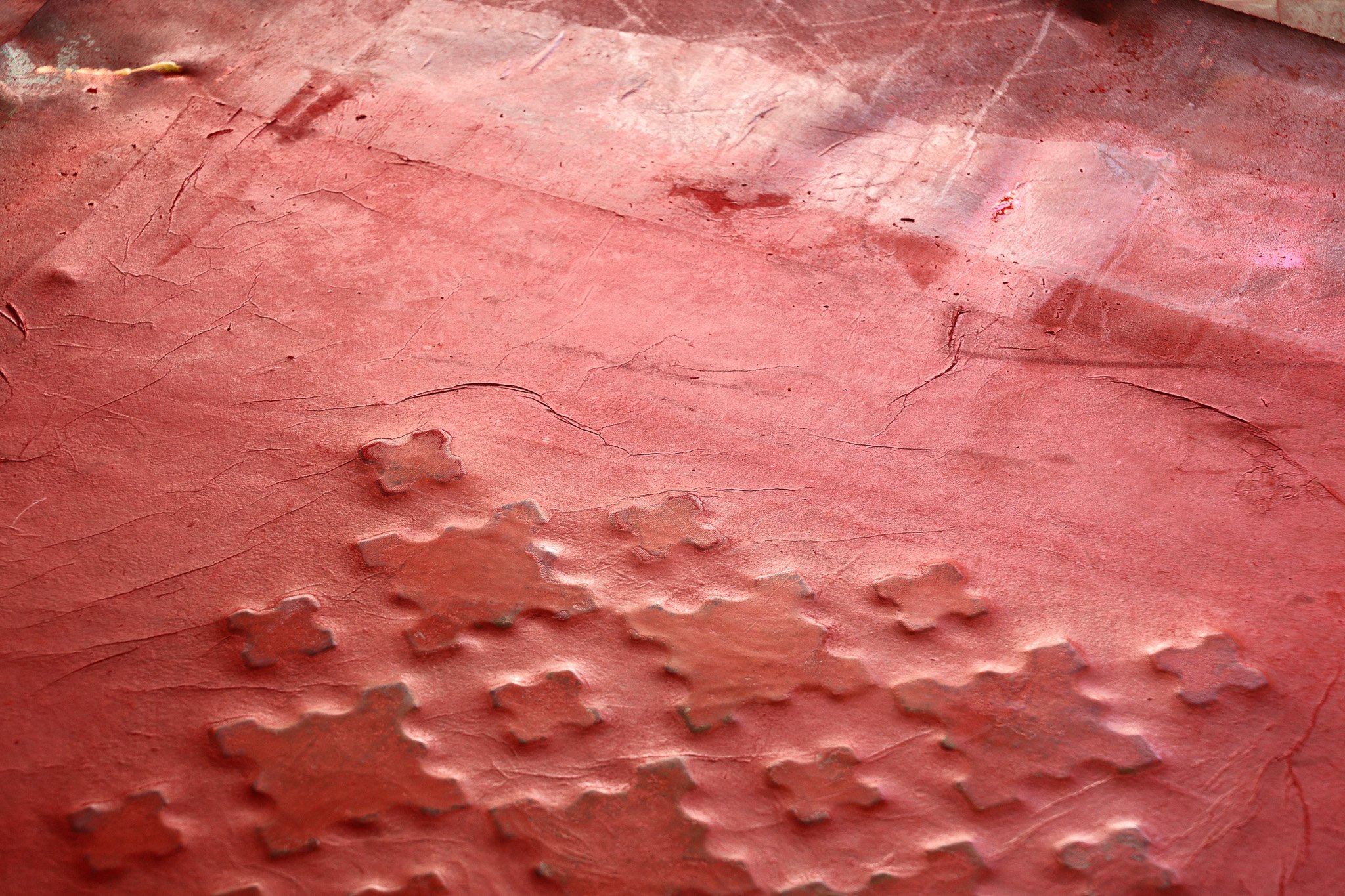
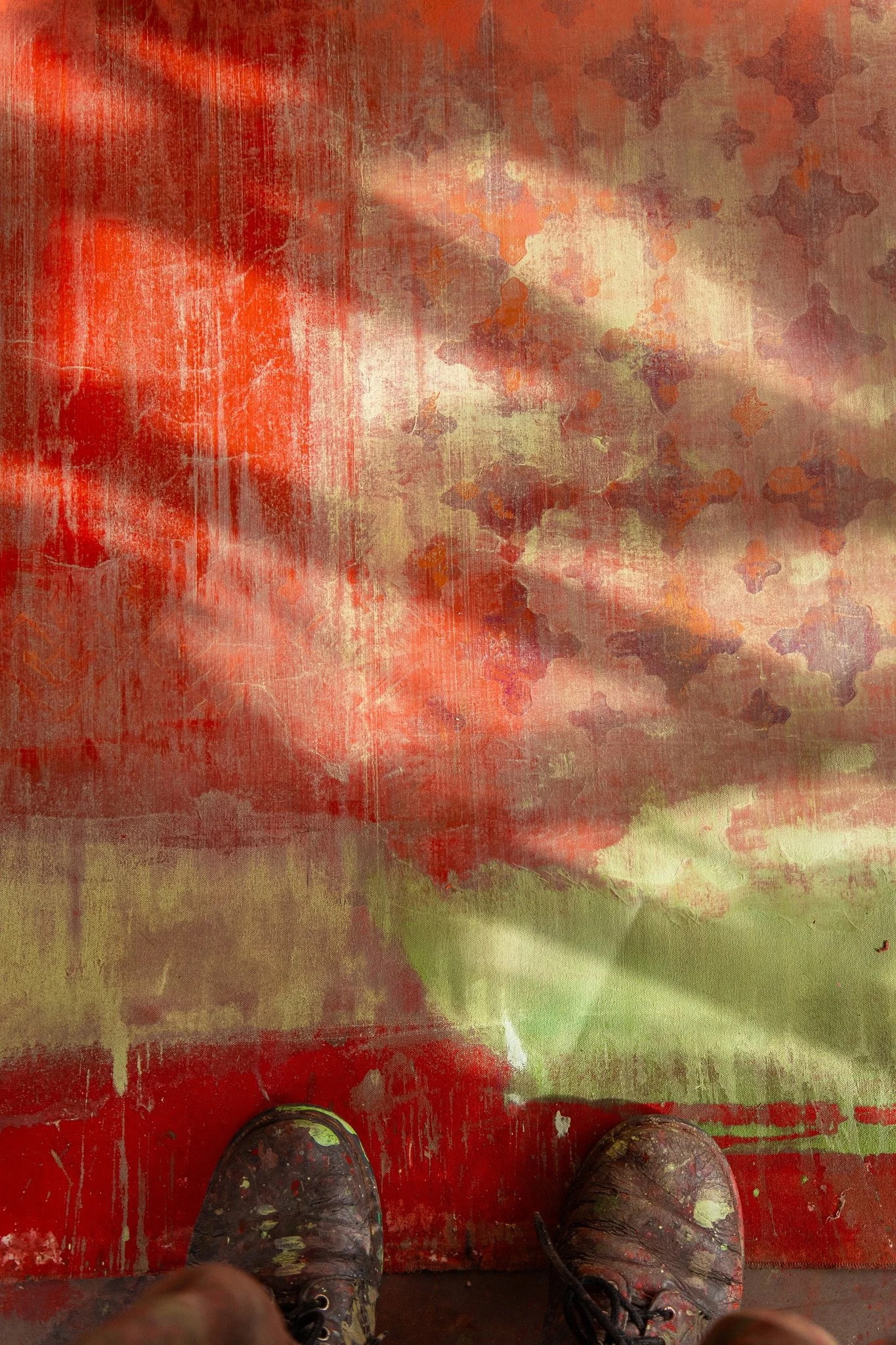
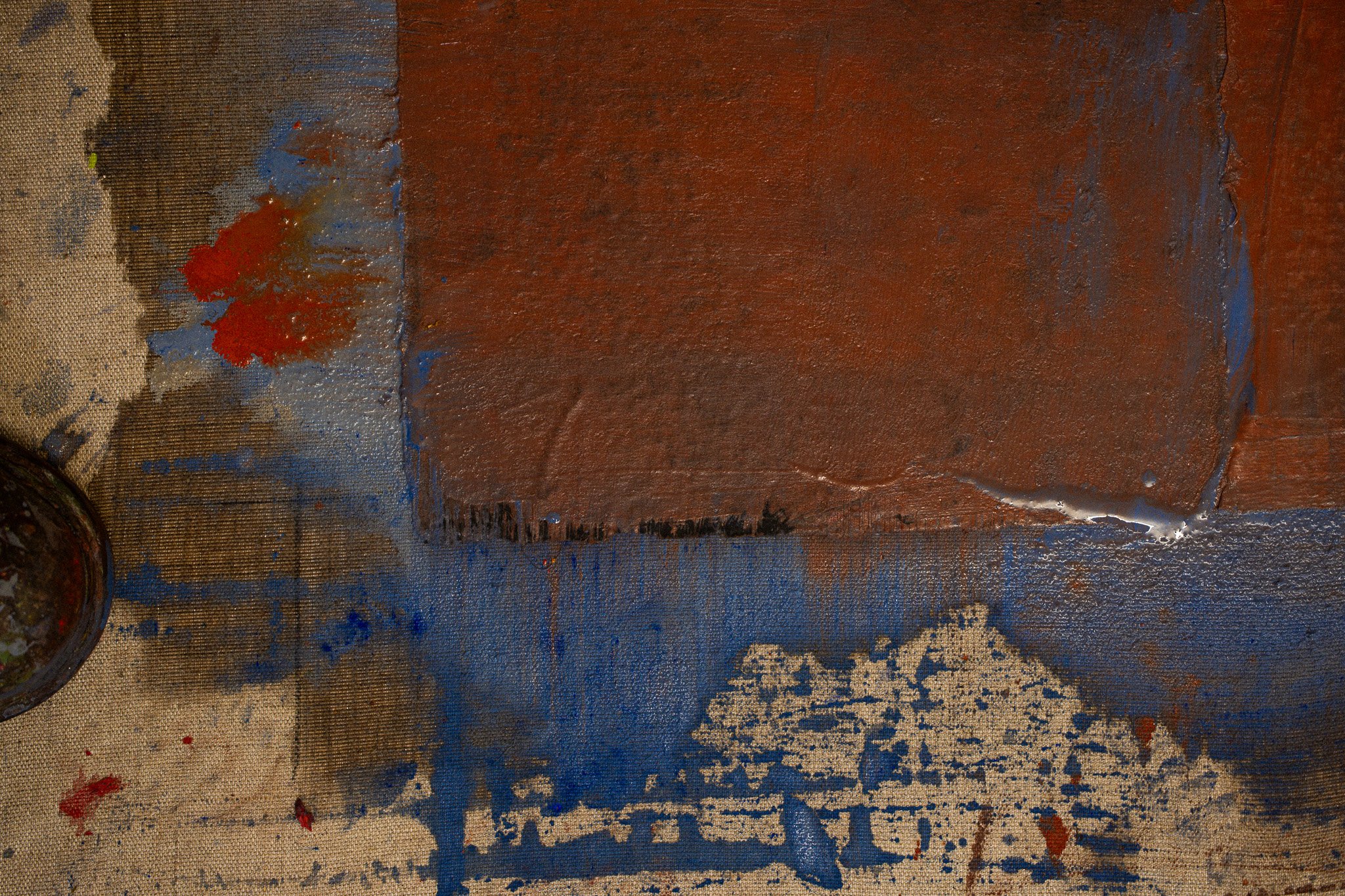
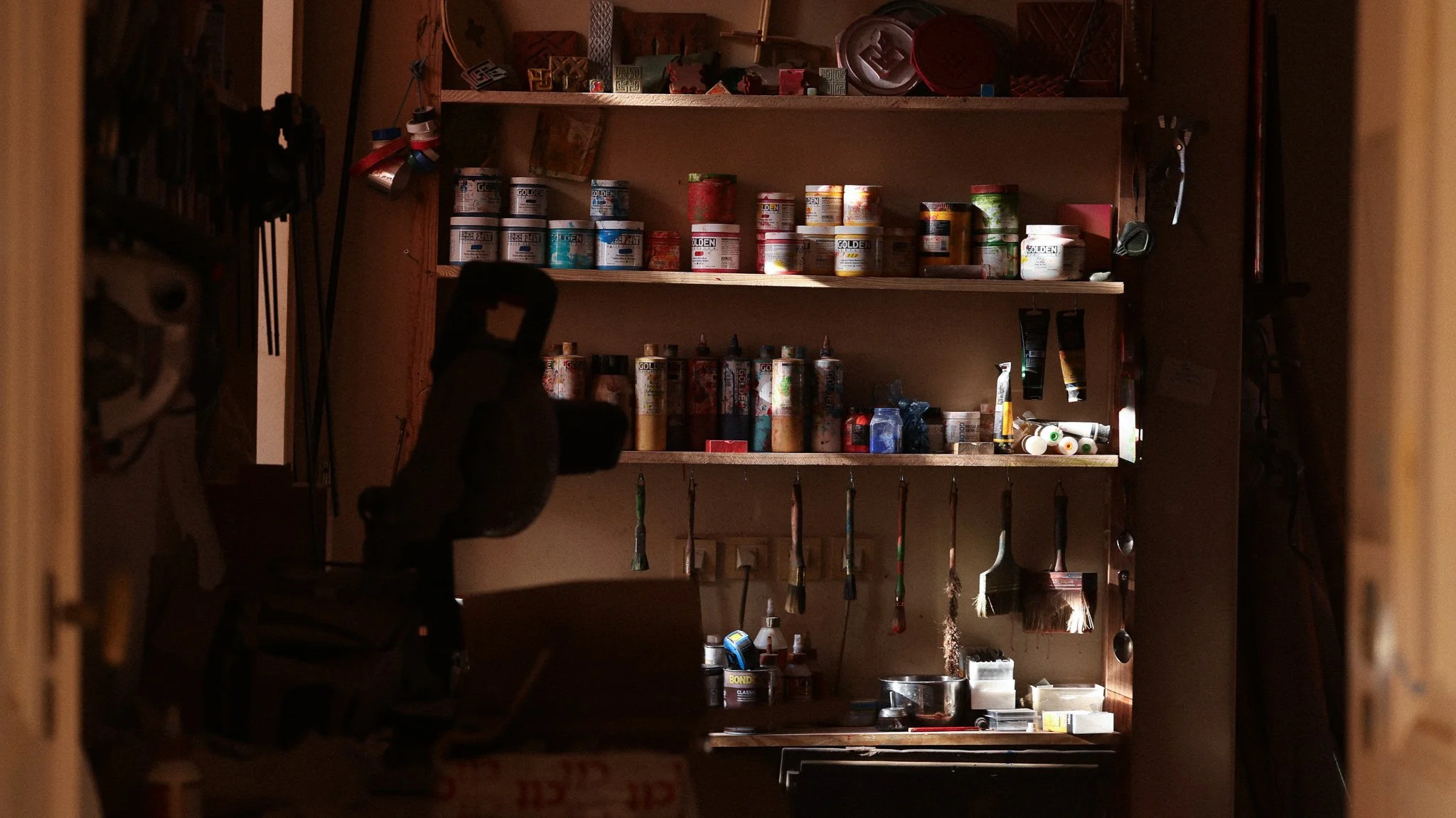
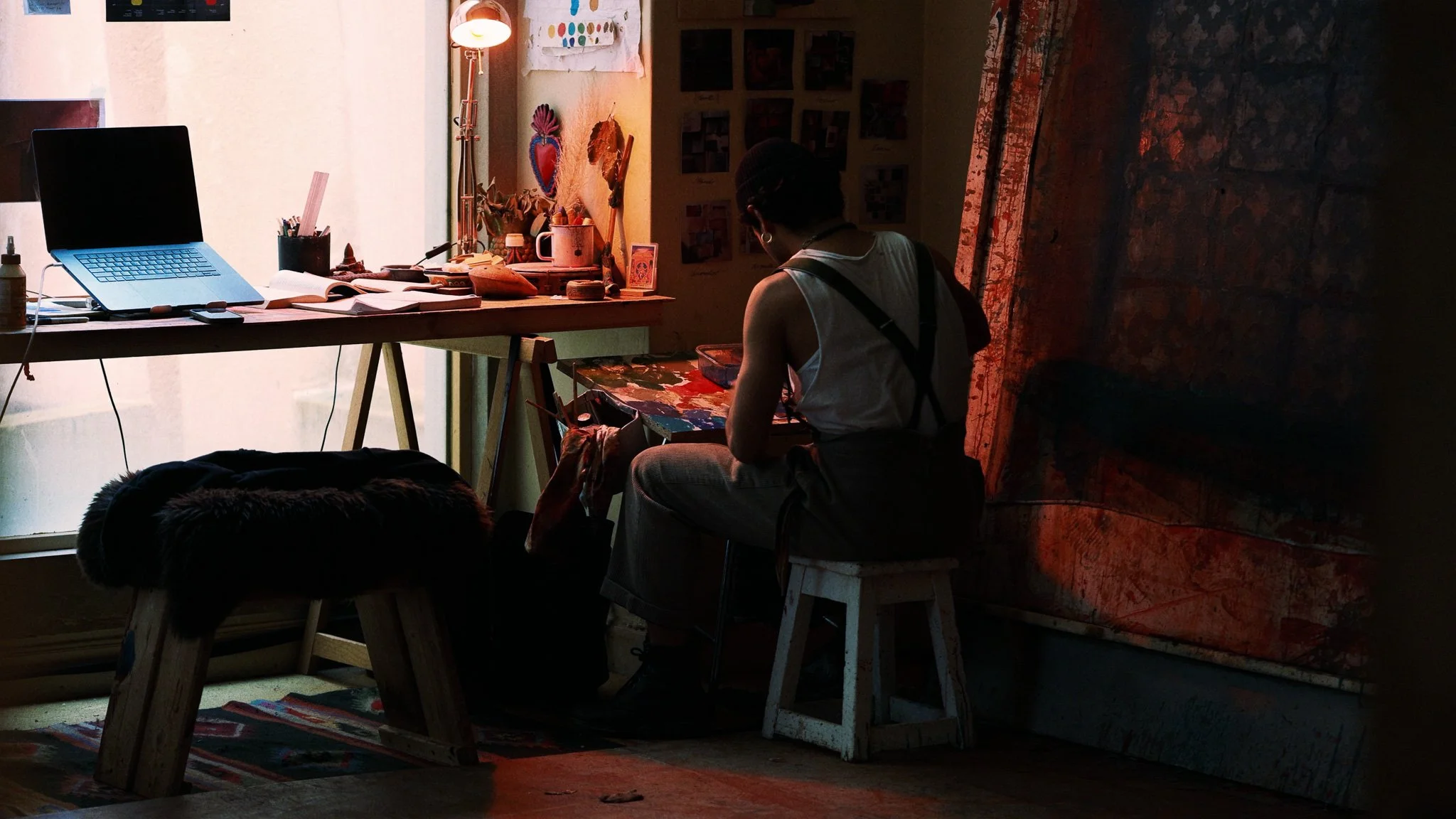
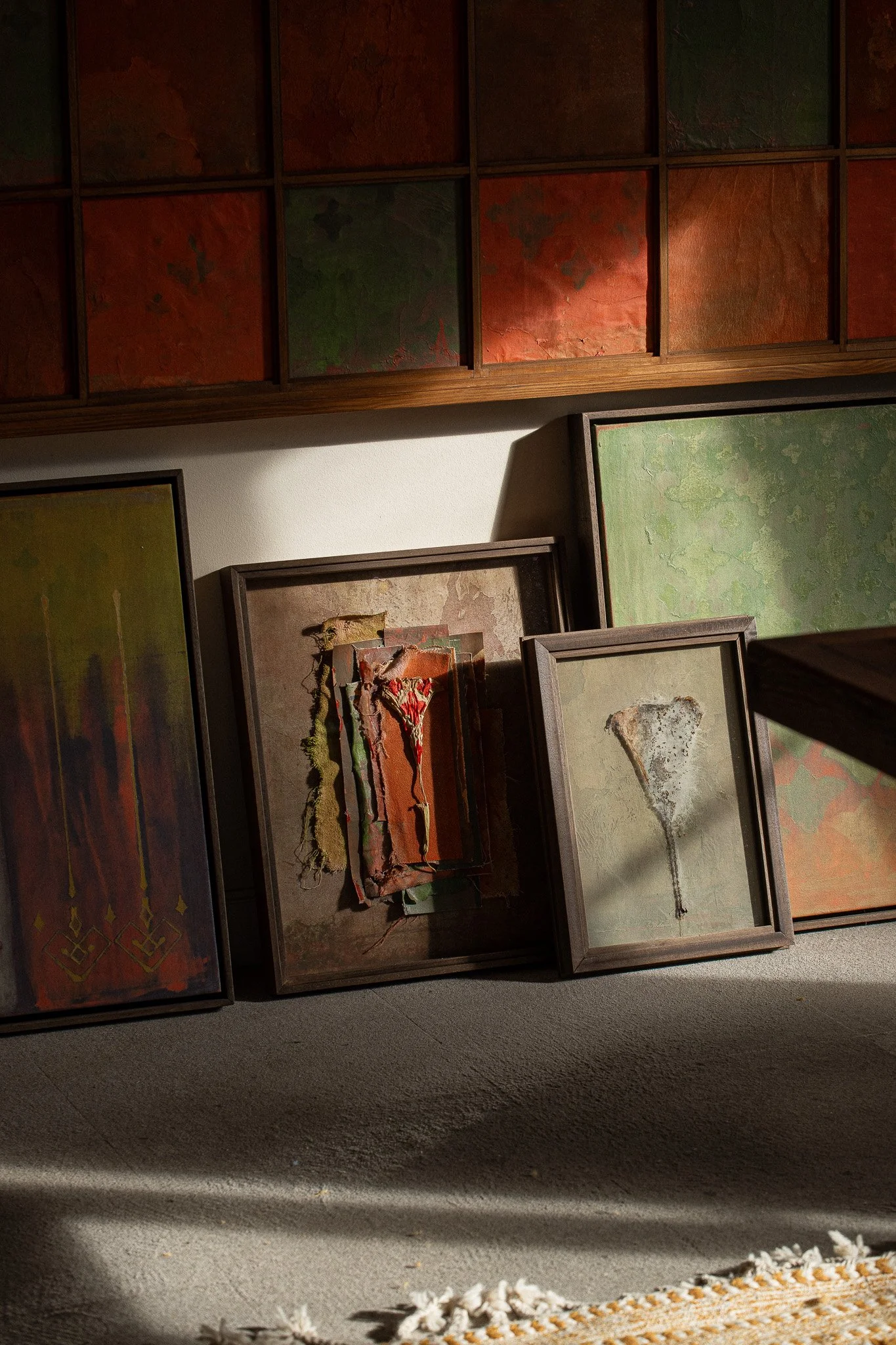
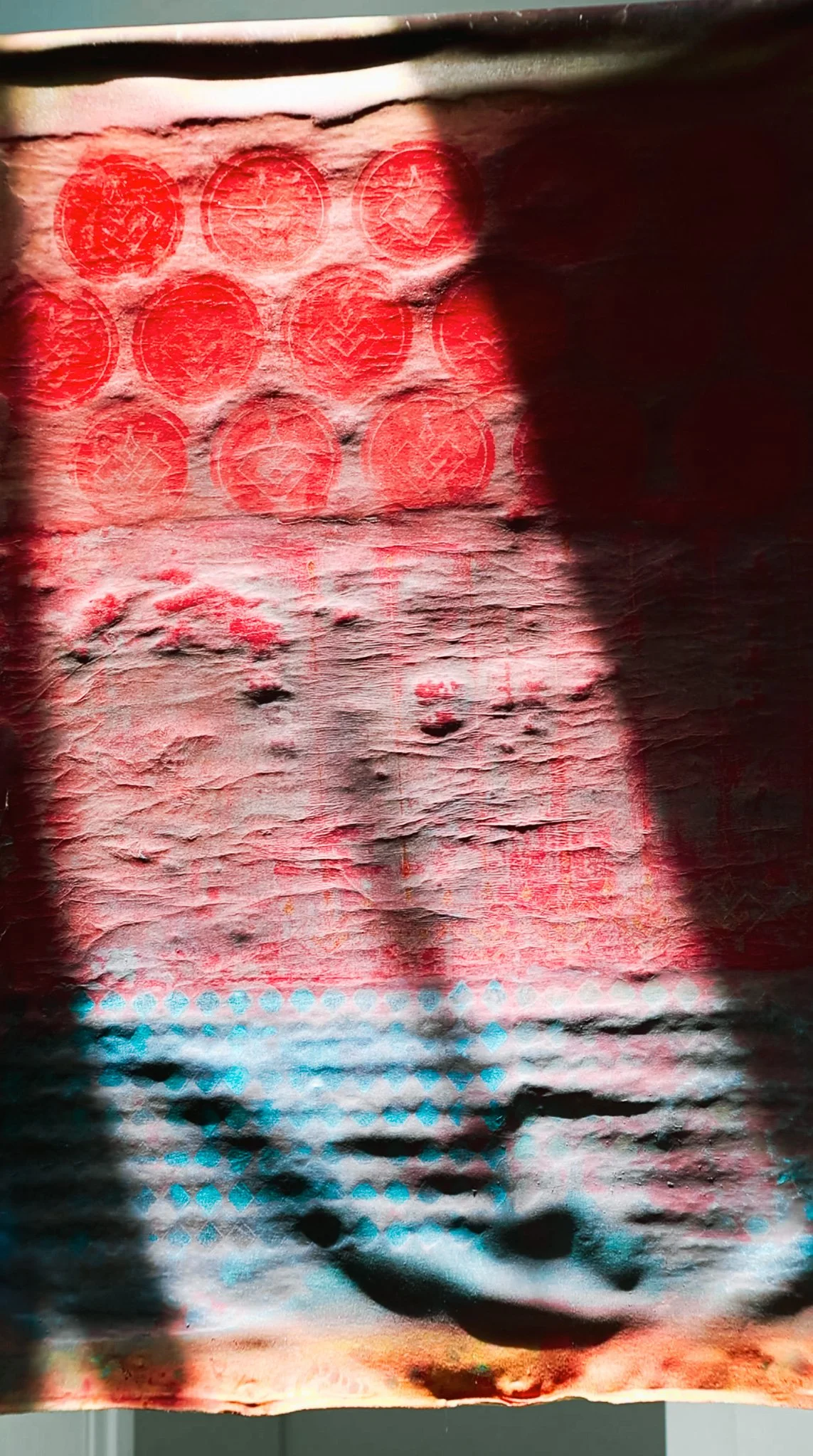
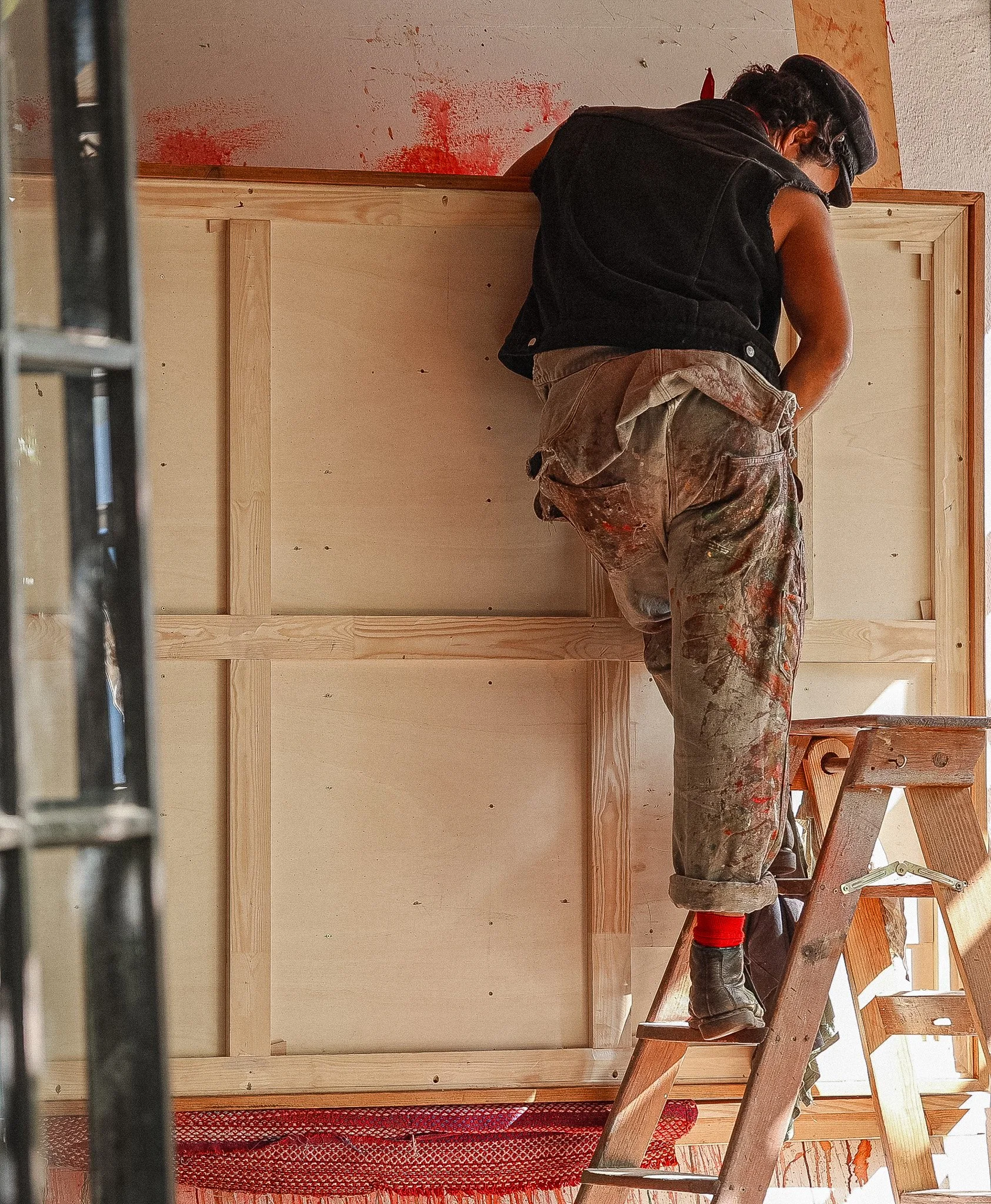
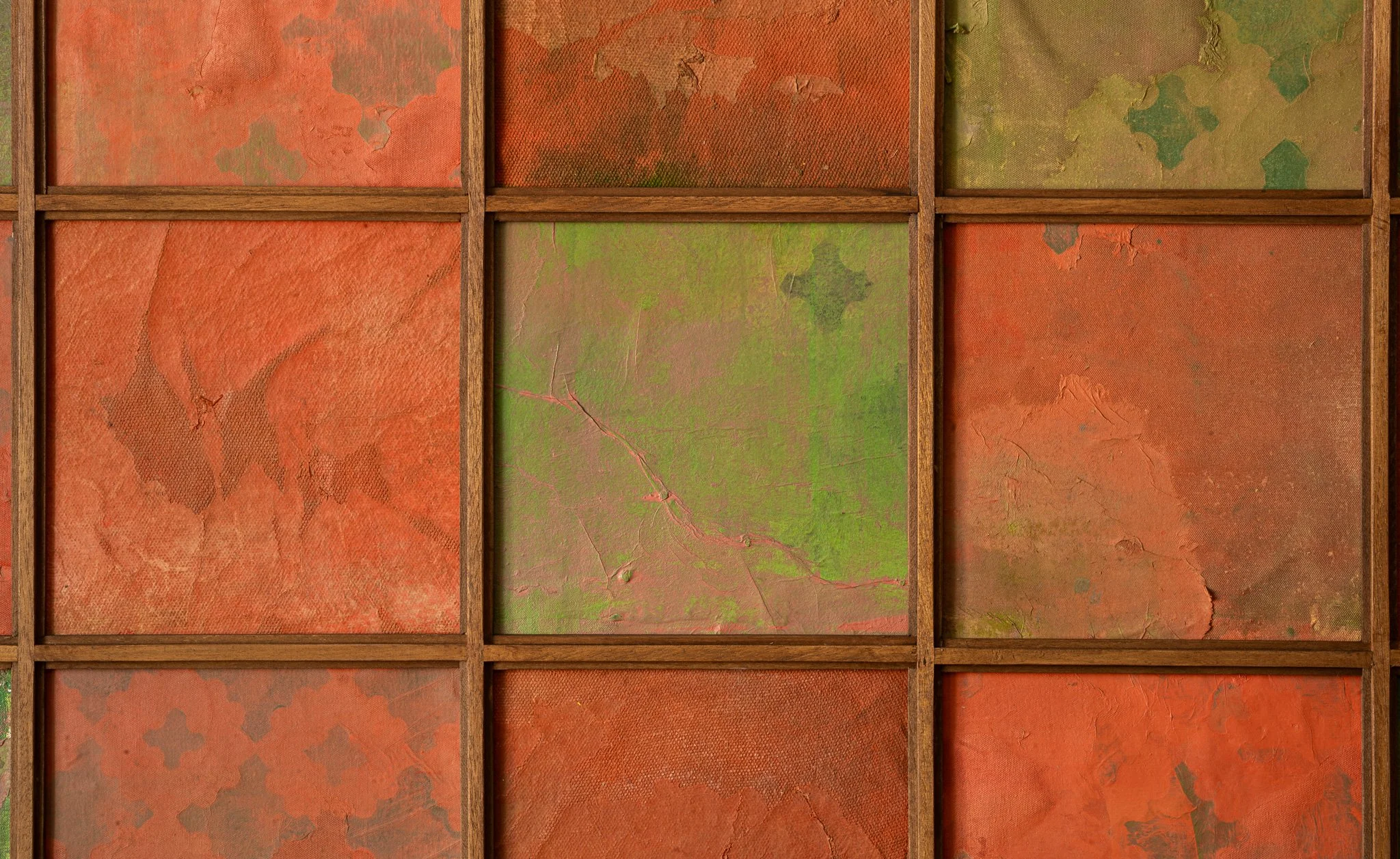
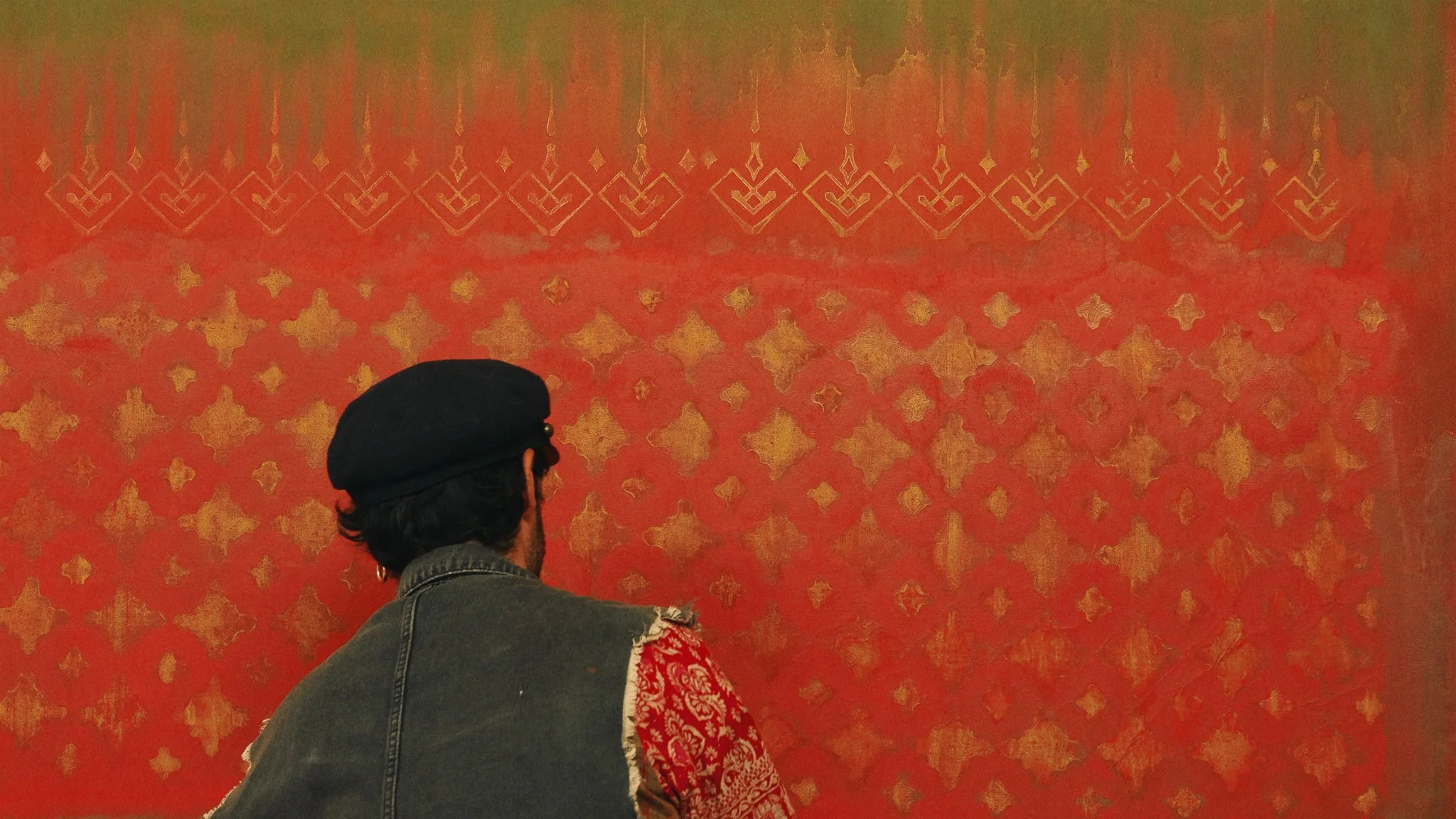
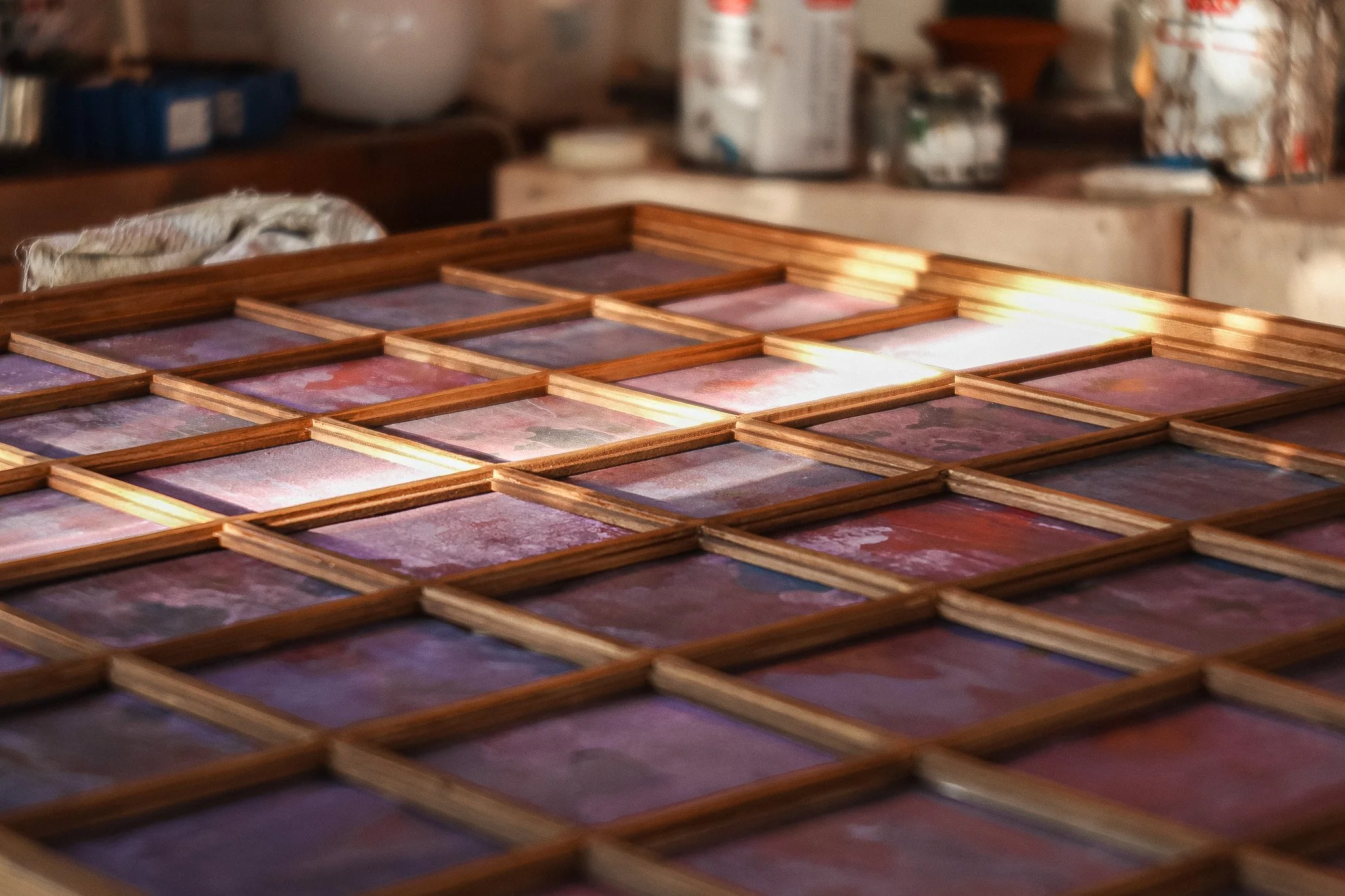
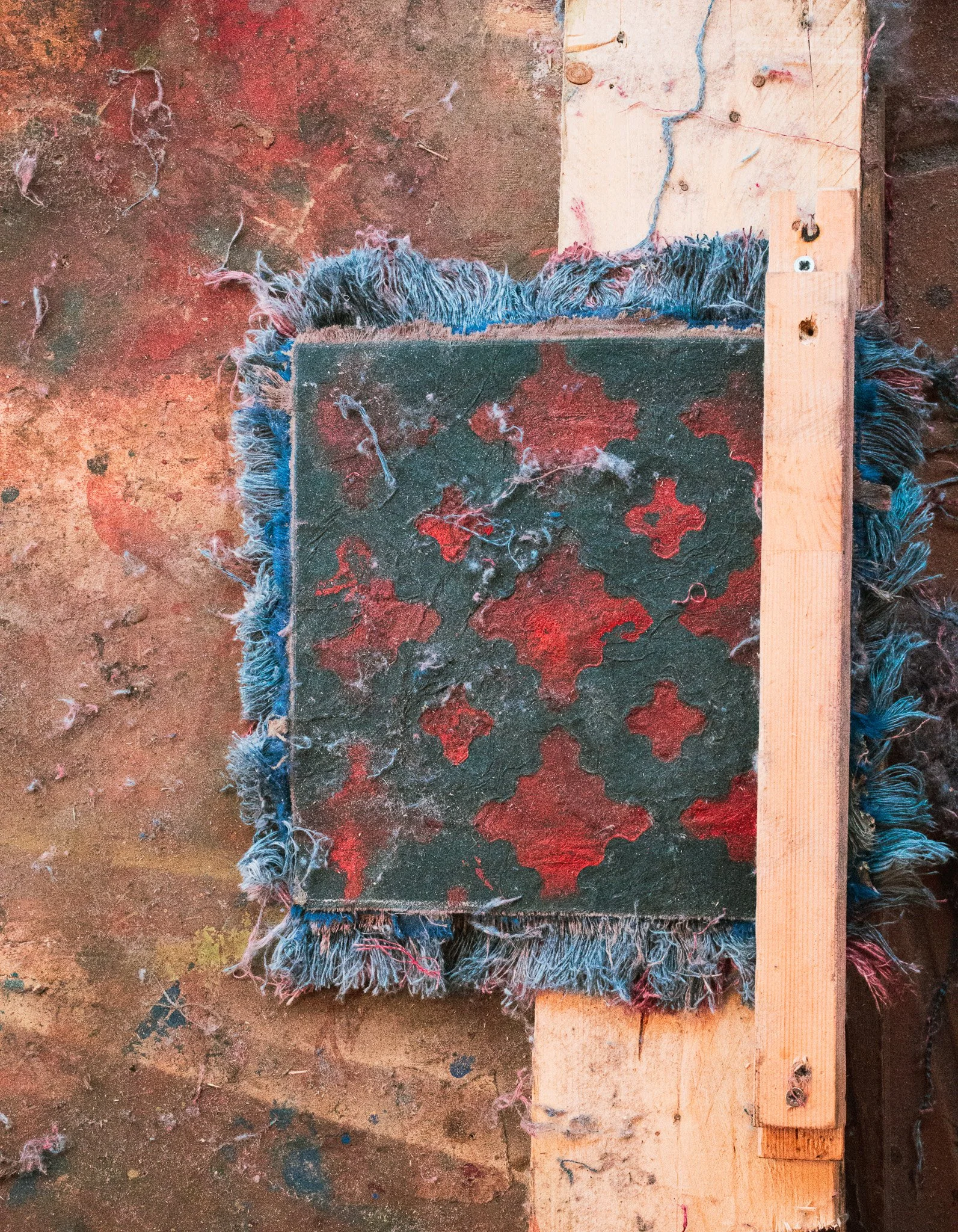
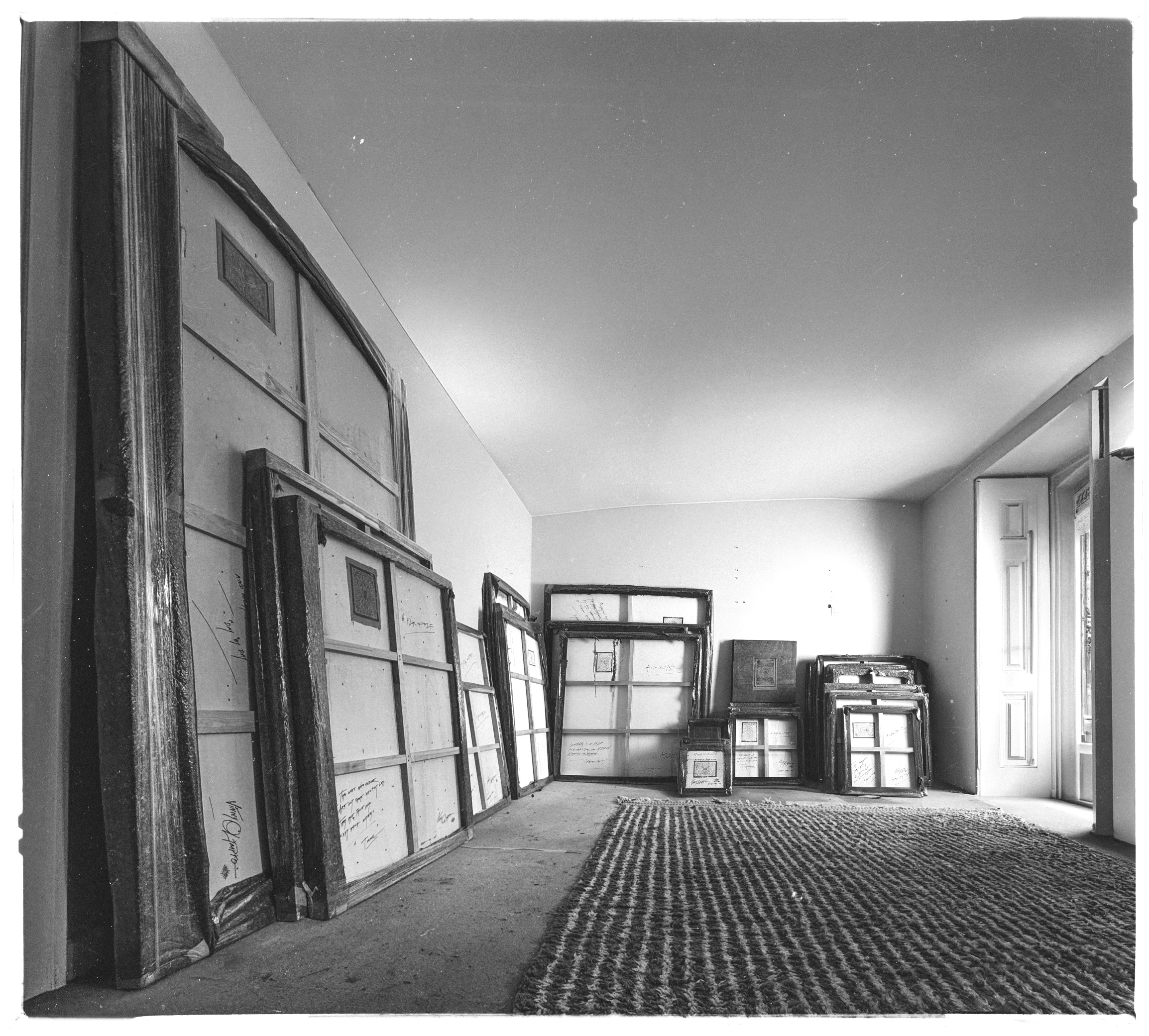
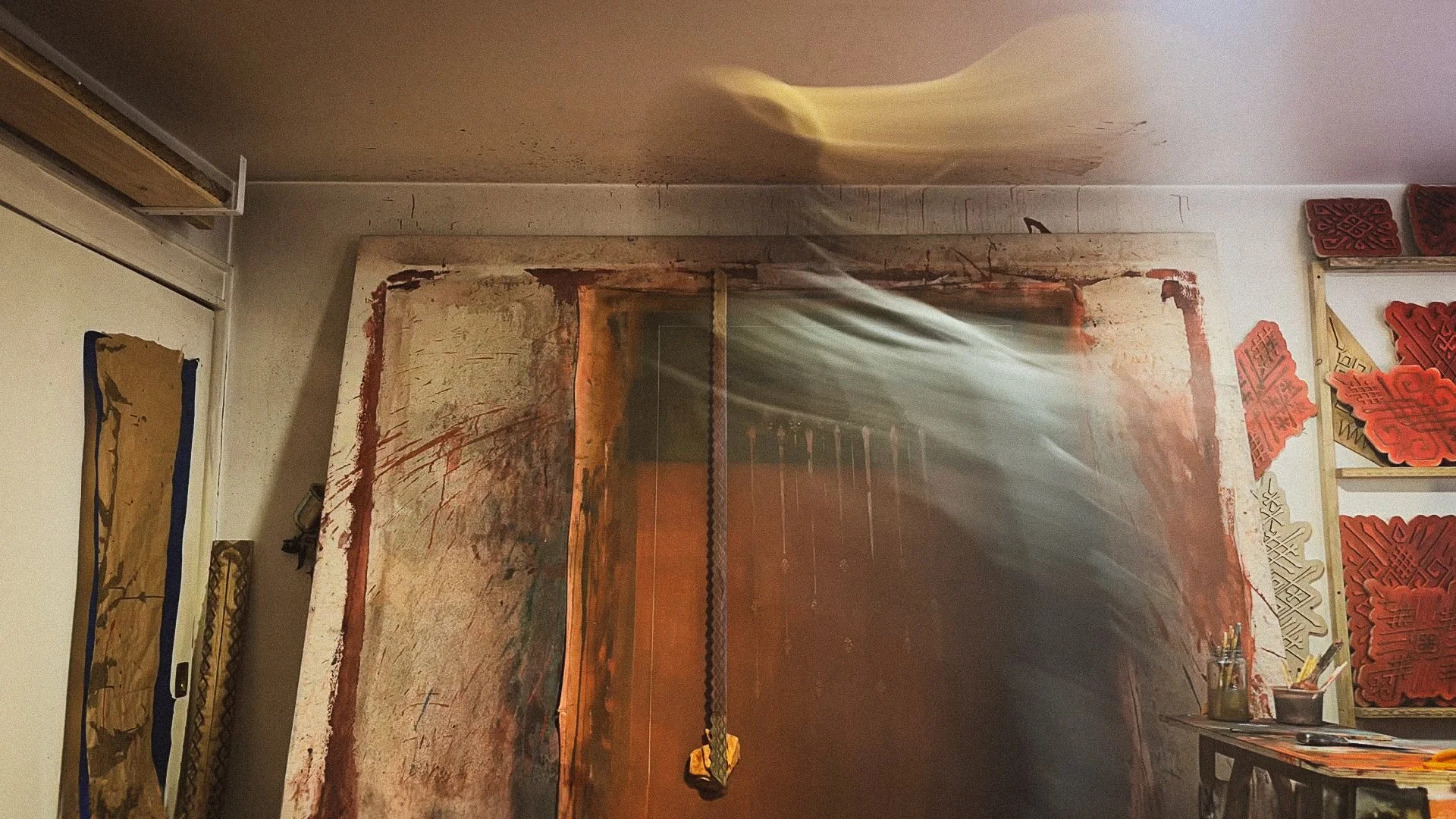
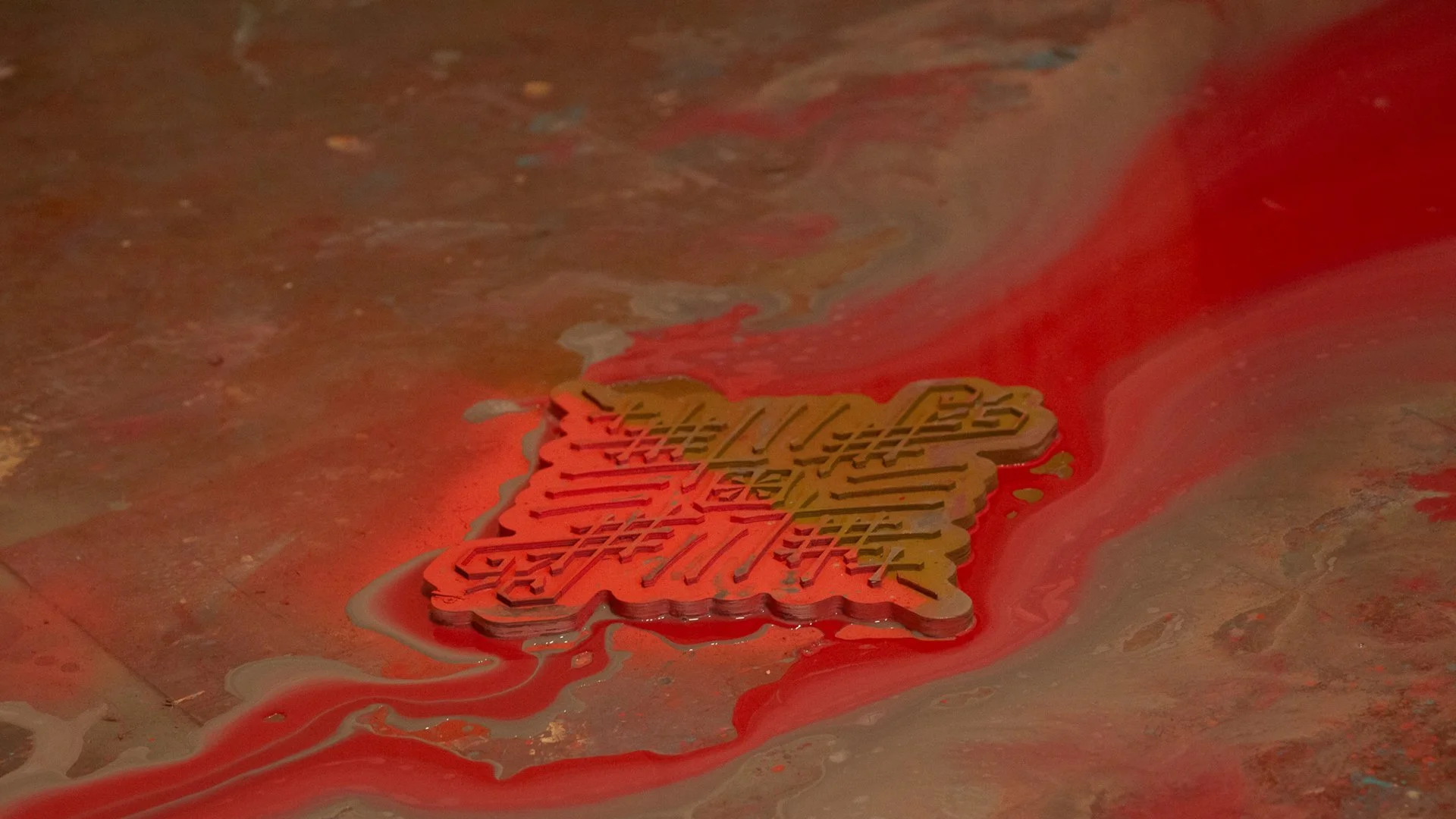
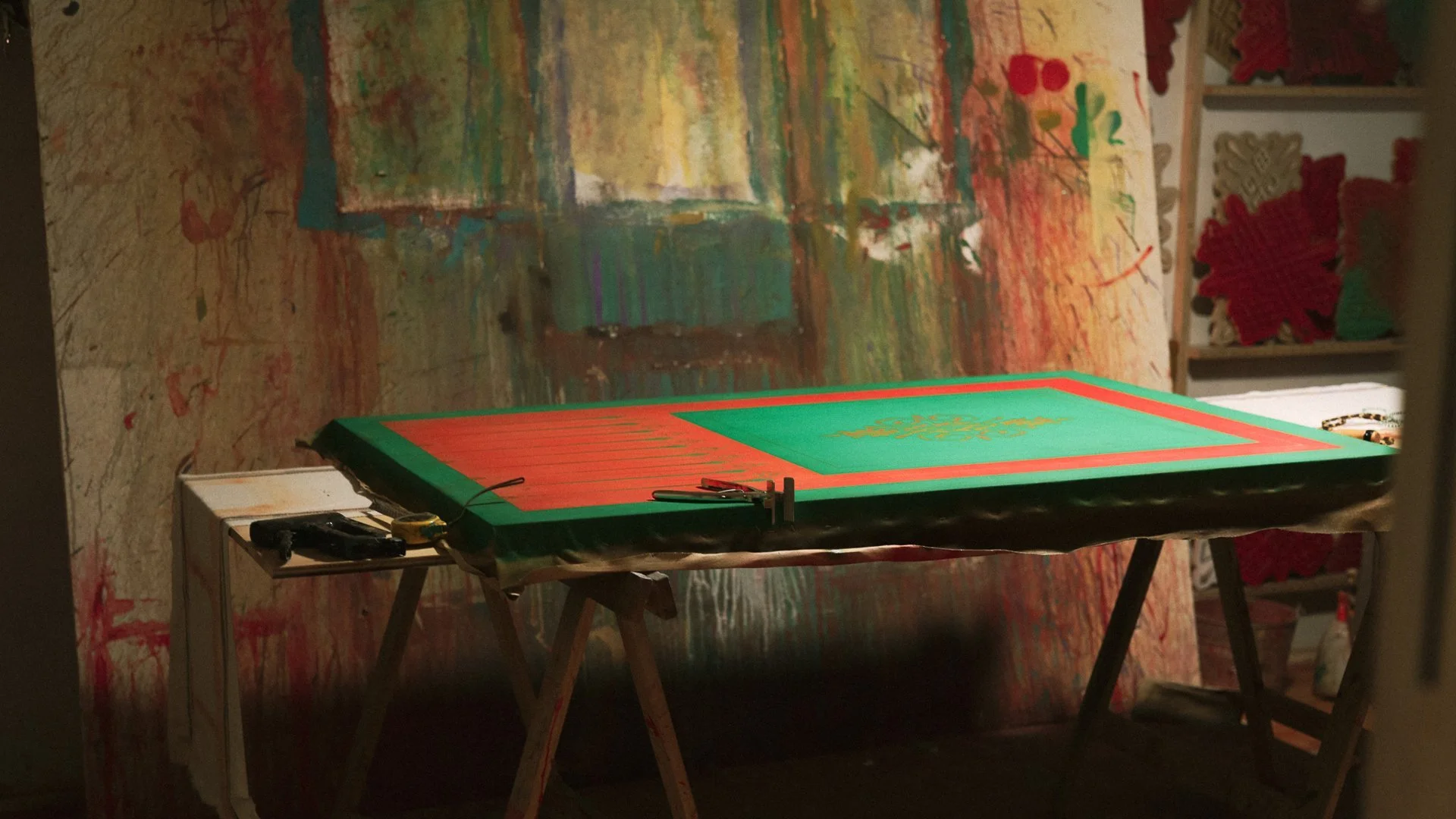
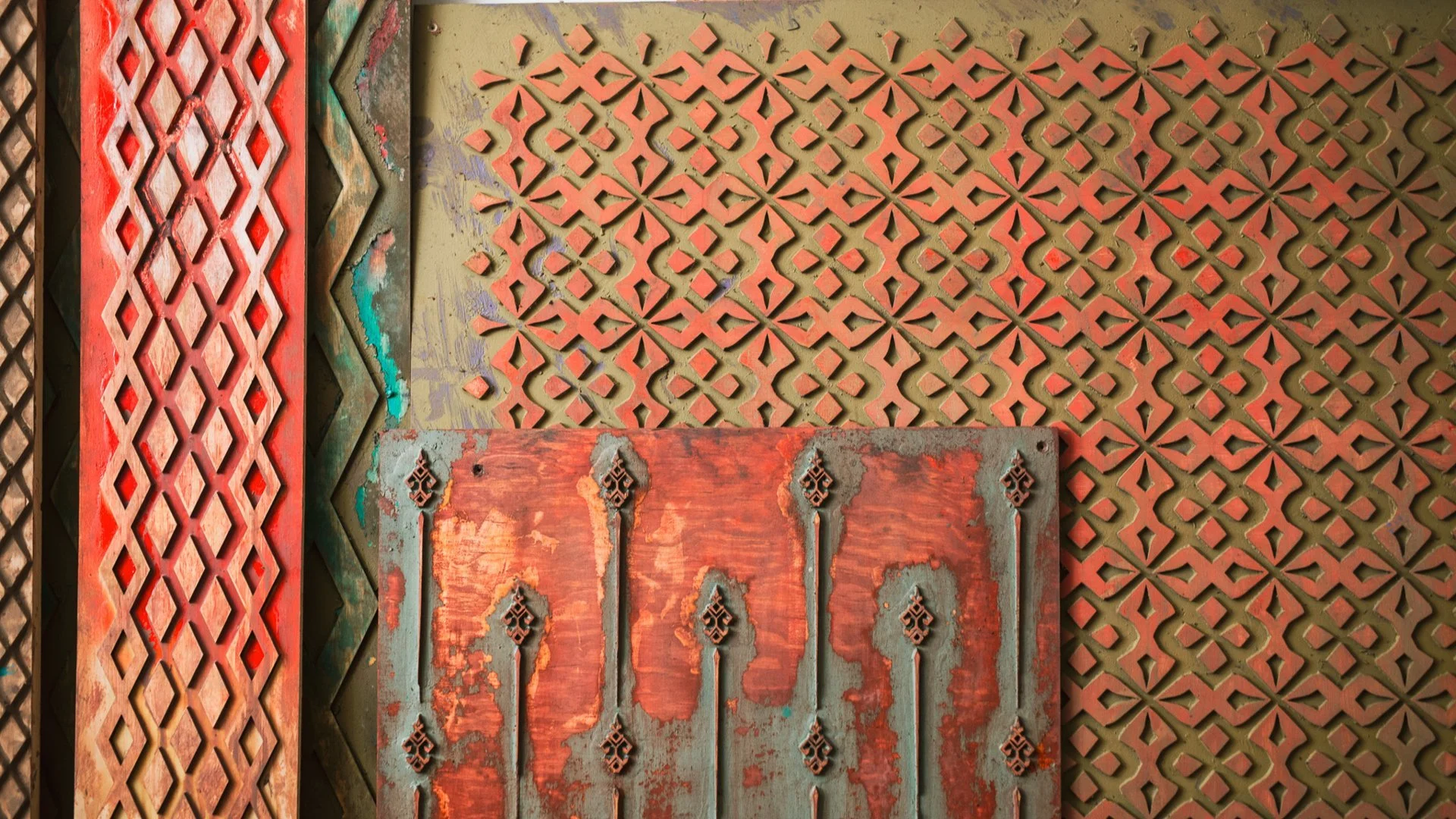
Yantras was made in Mexico City, on a press I built into the studio wall.
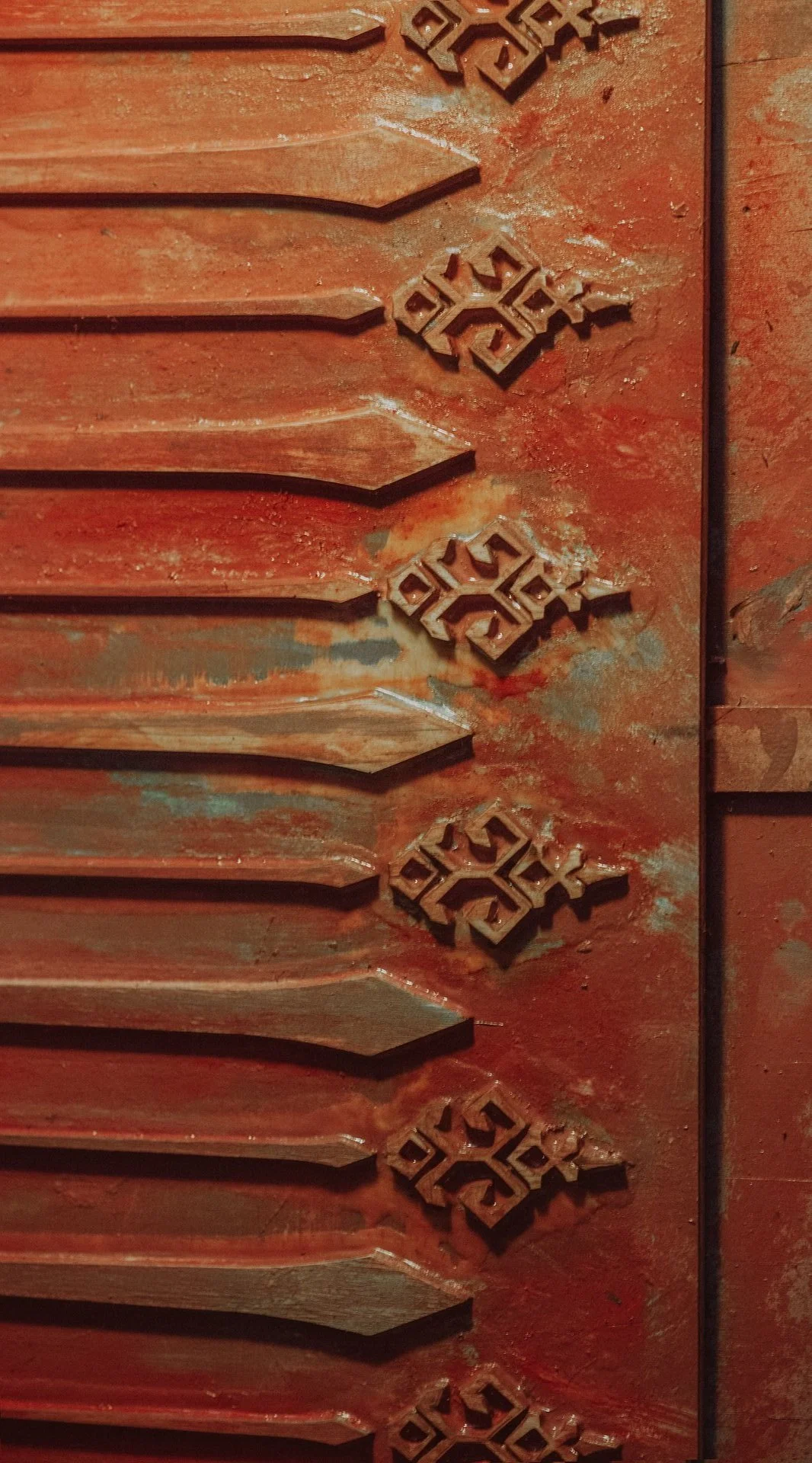
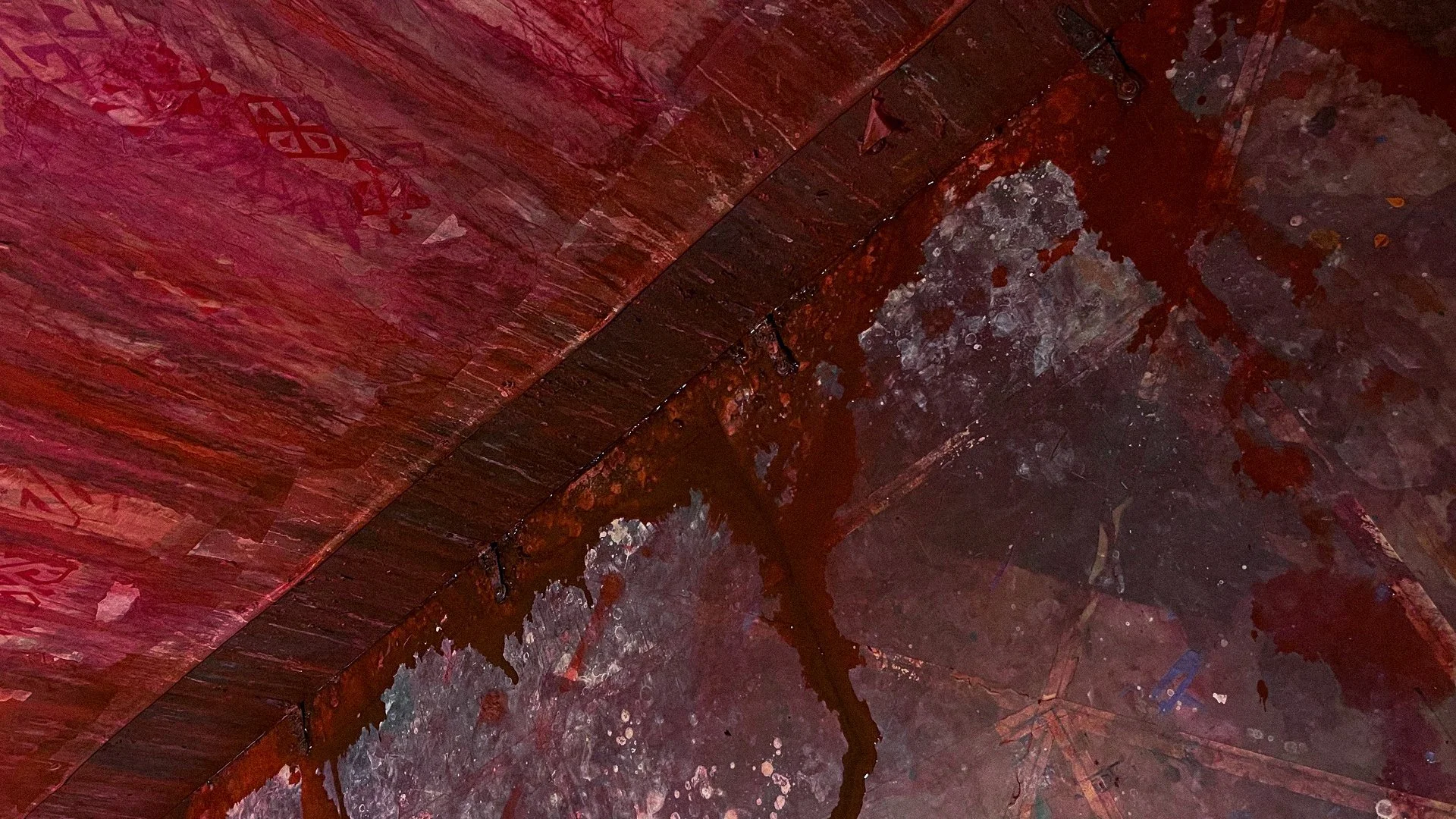
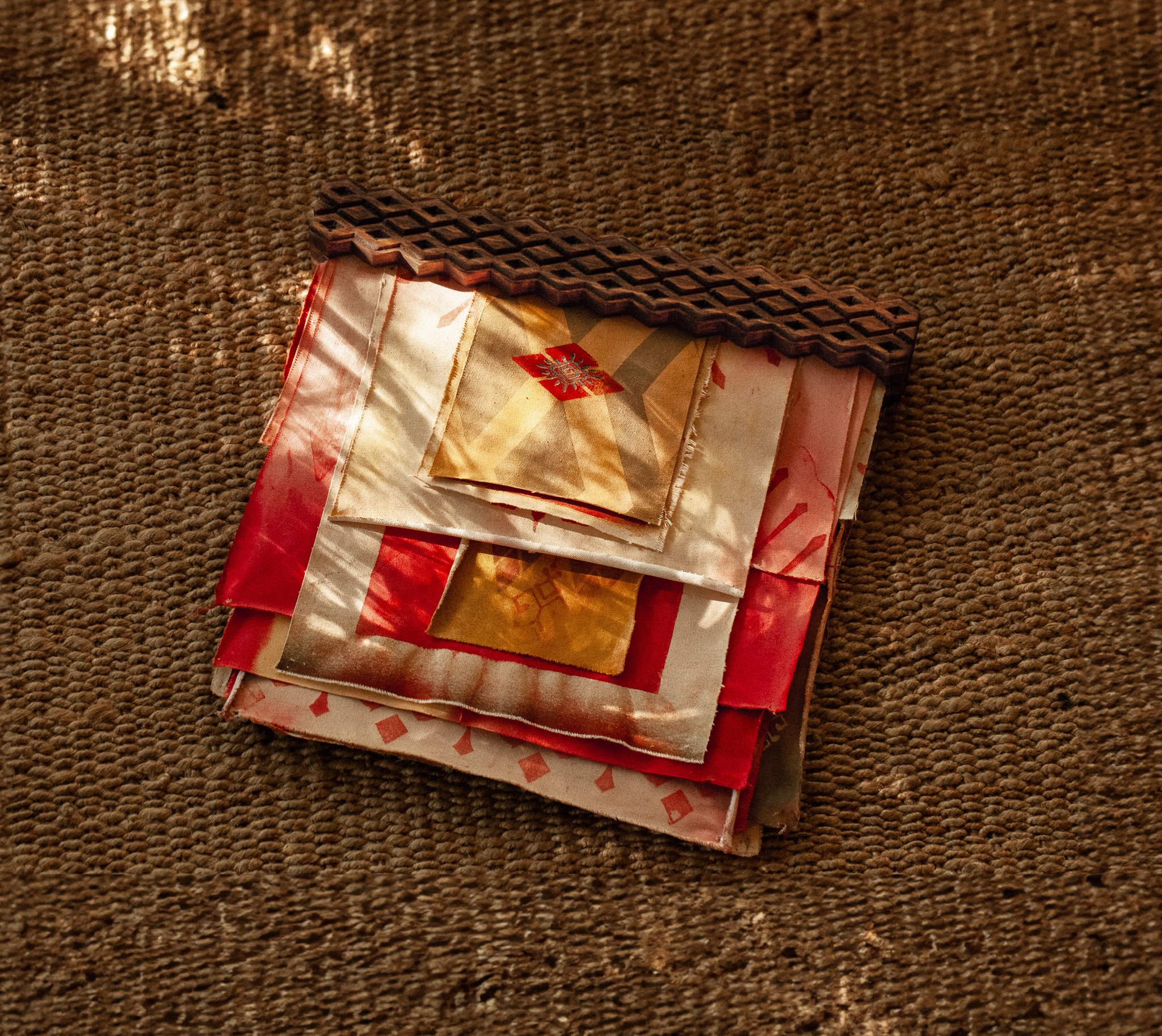
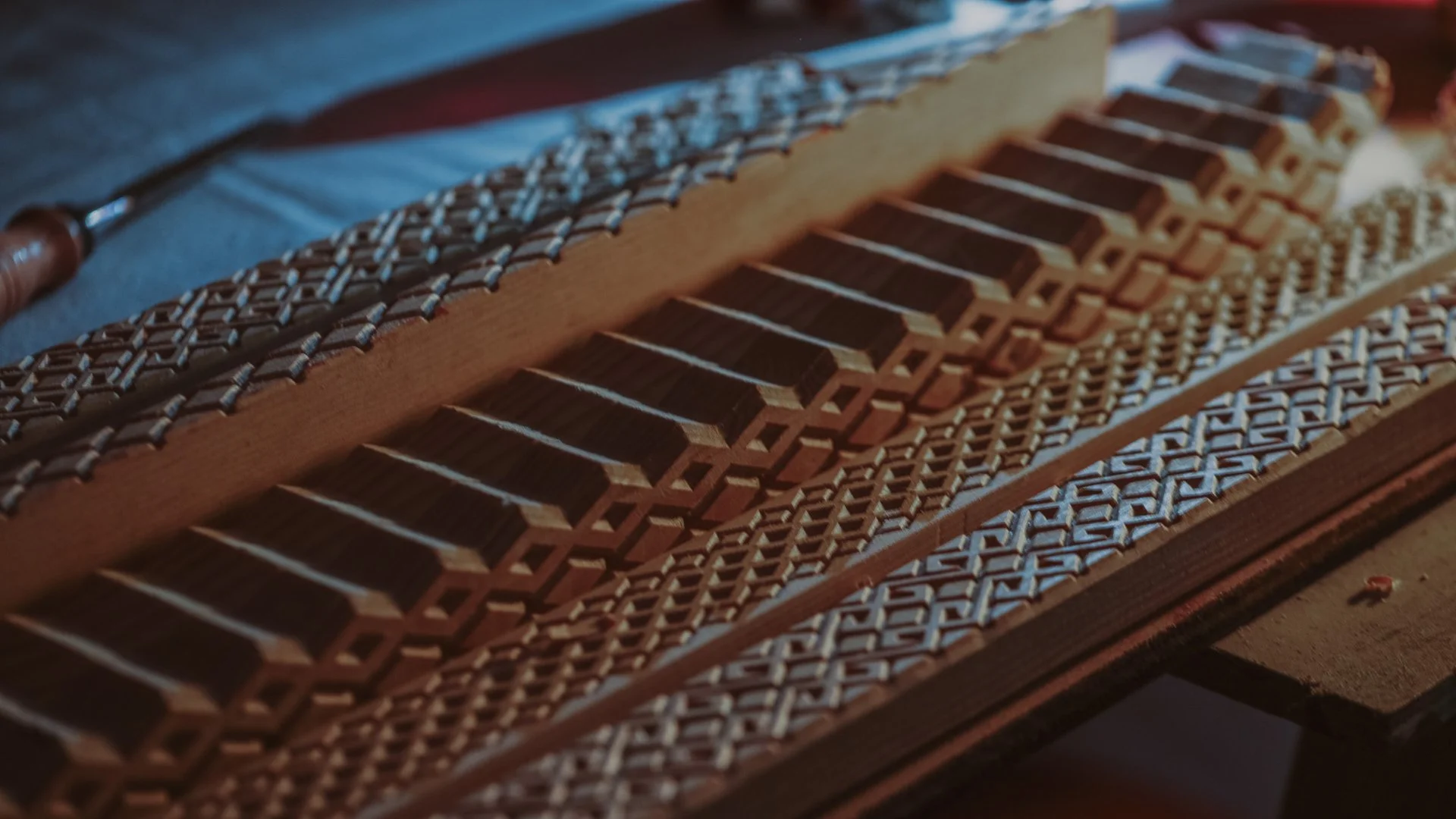
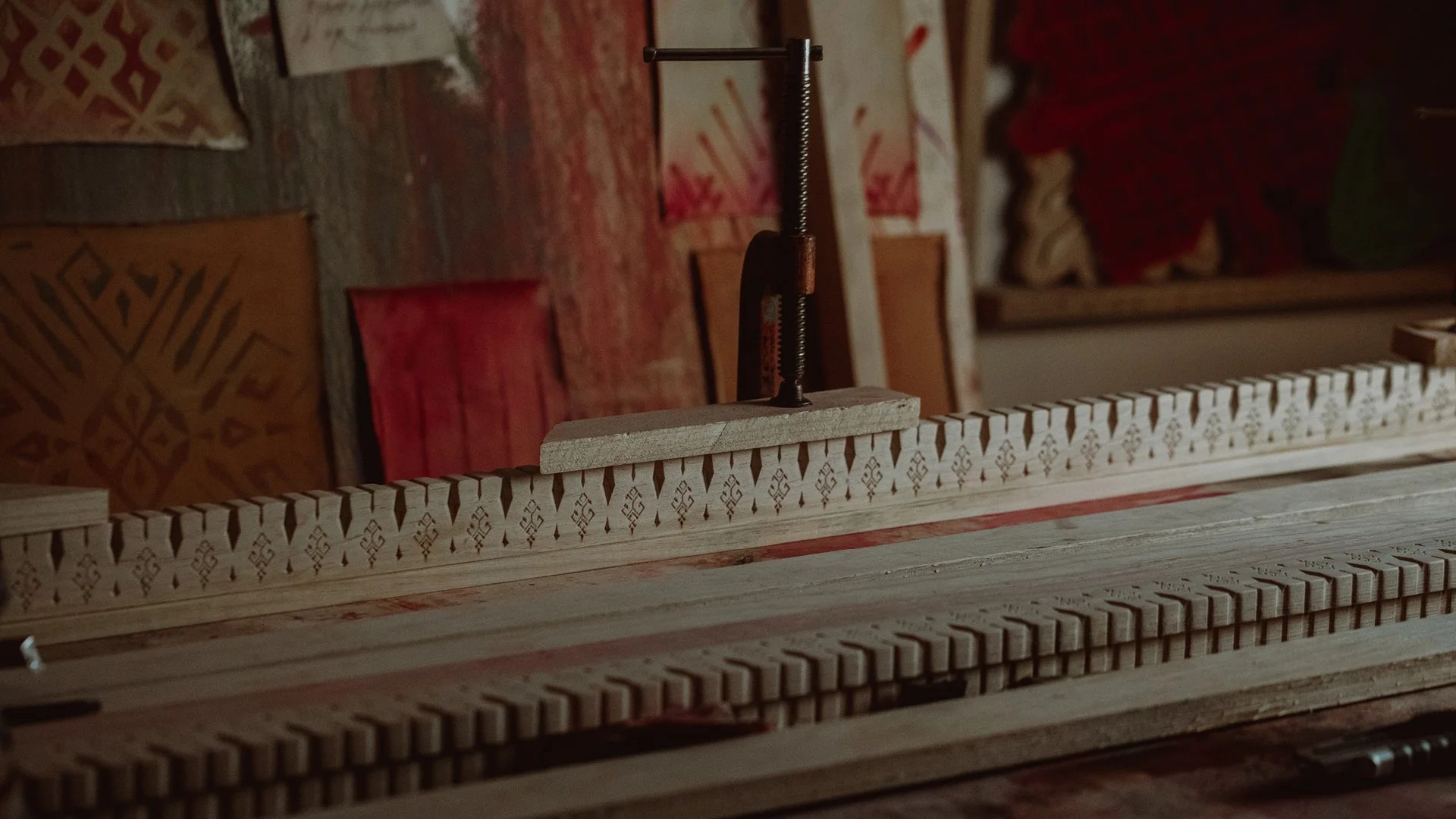
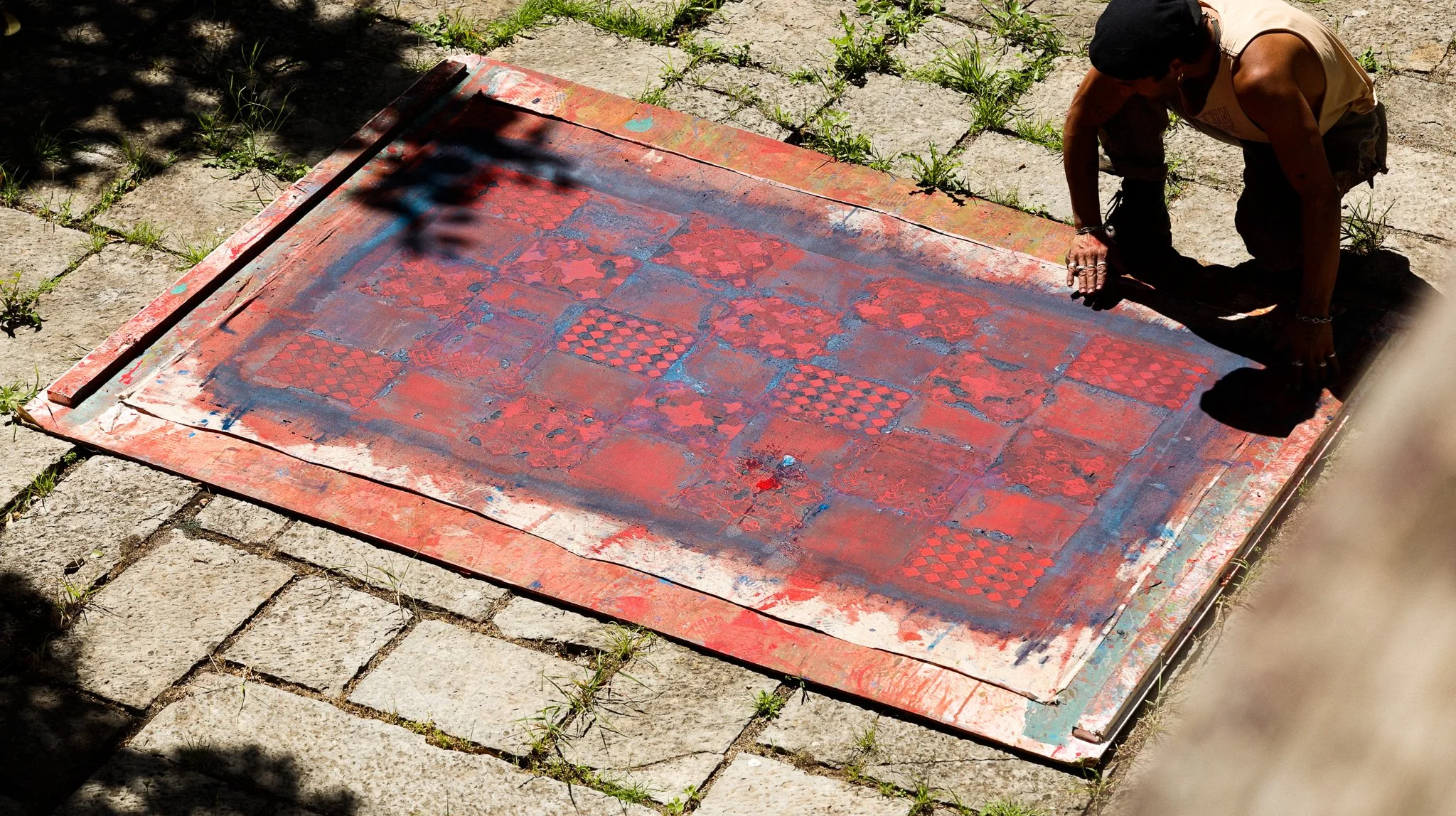
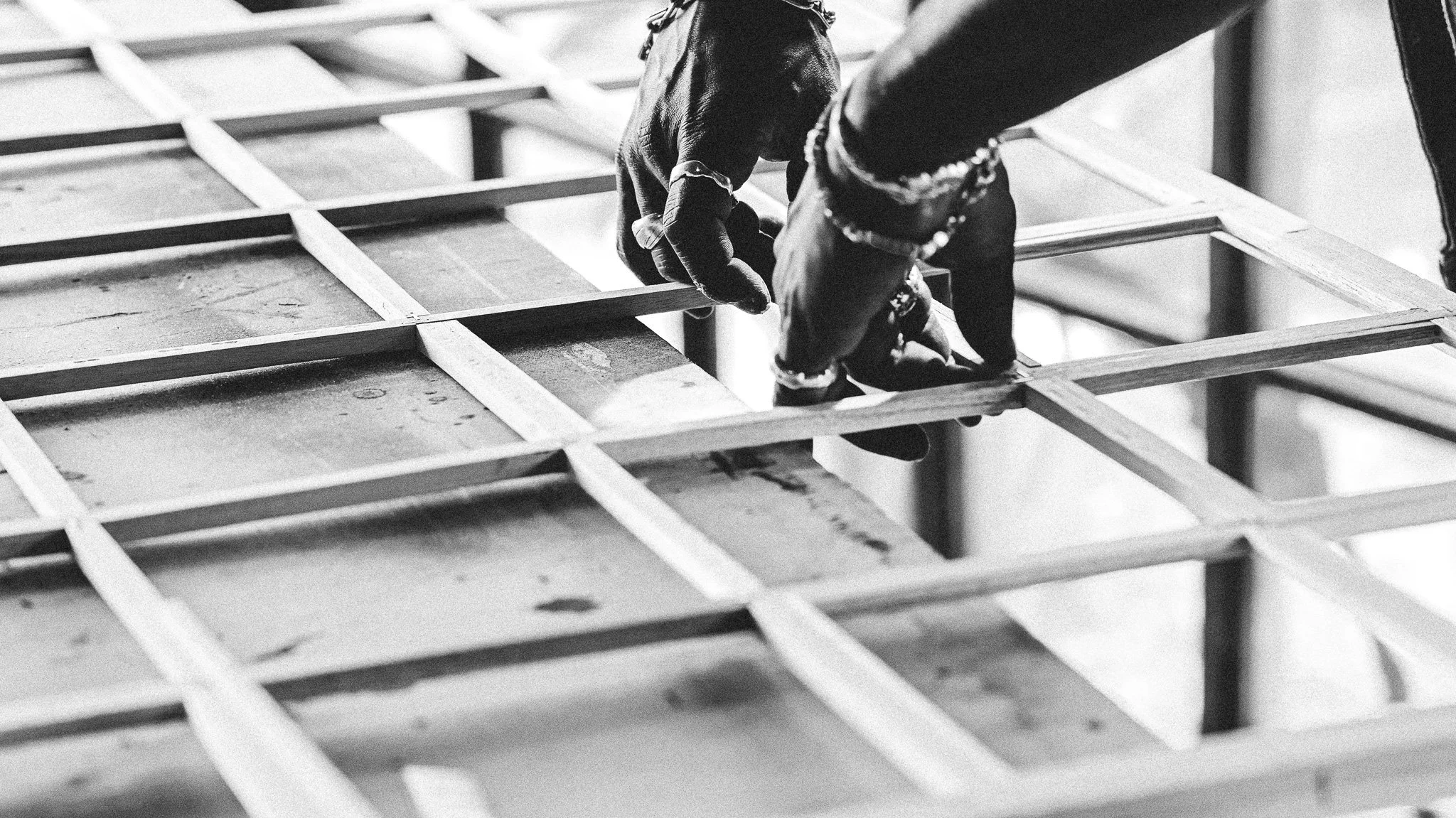
The whole studio wall was the mechanism a hinged folding press, the block prints painted and the top folded down onto the canvas so the surface meets the block. It is the oldest way to print something, and I wanted the oldest way.
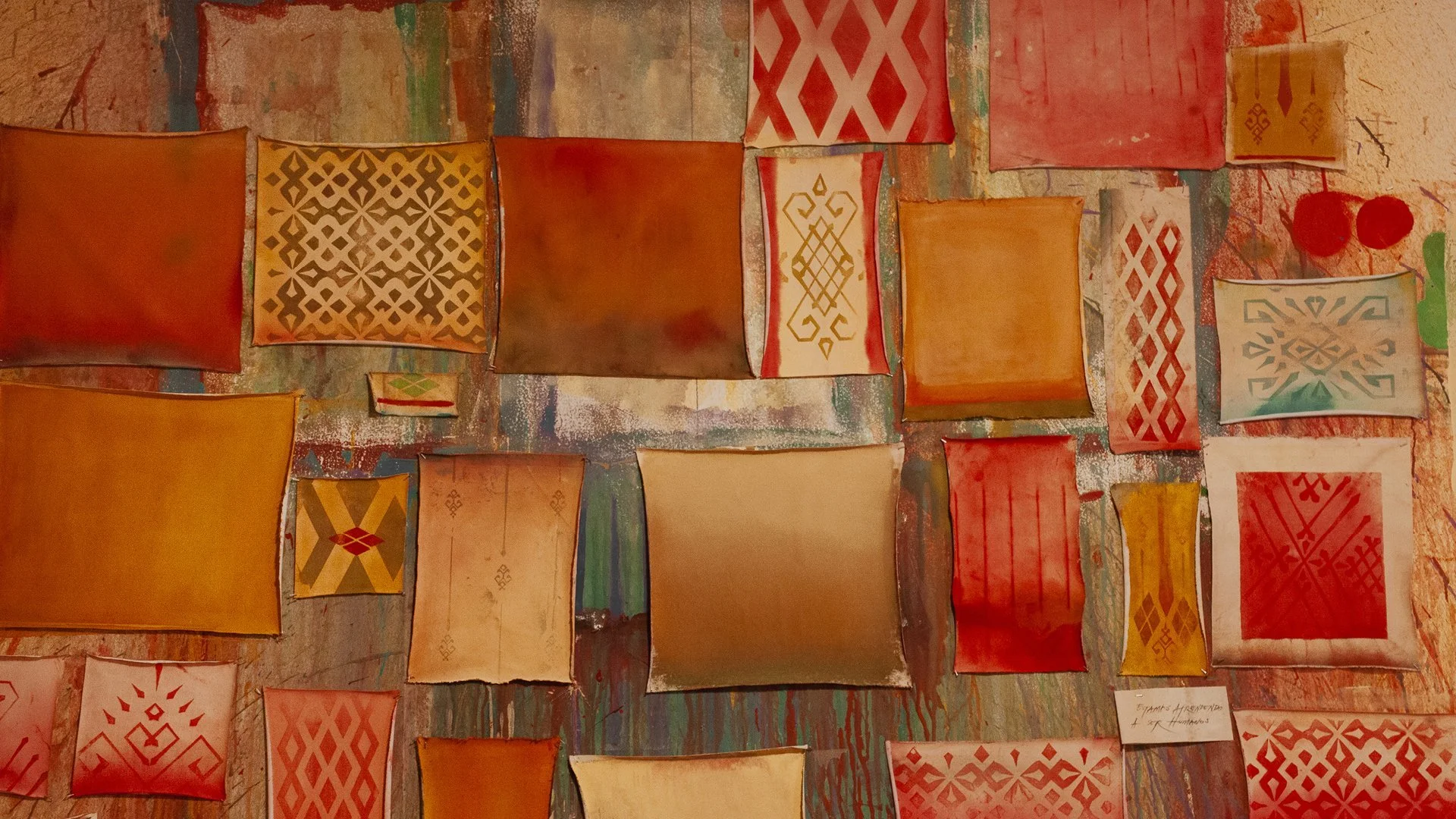
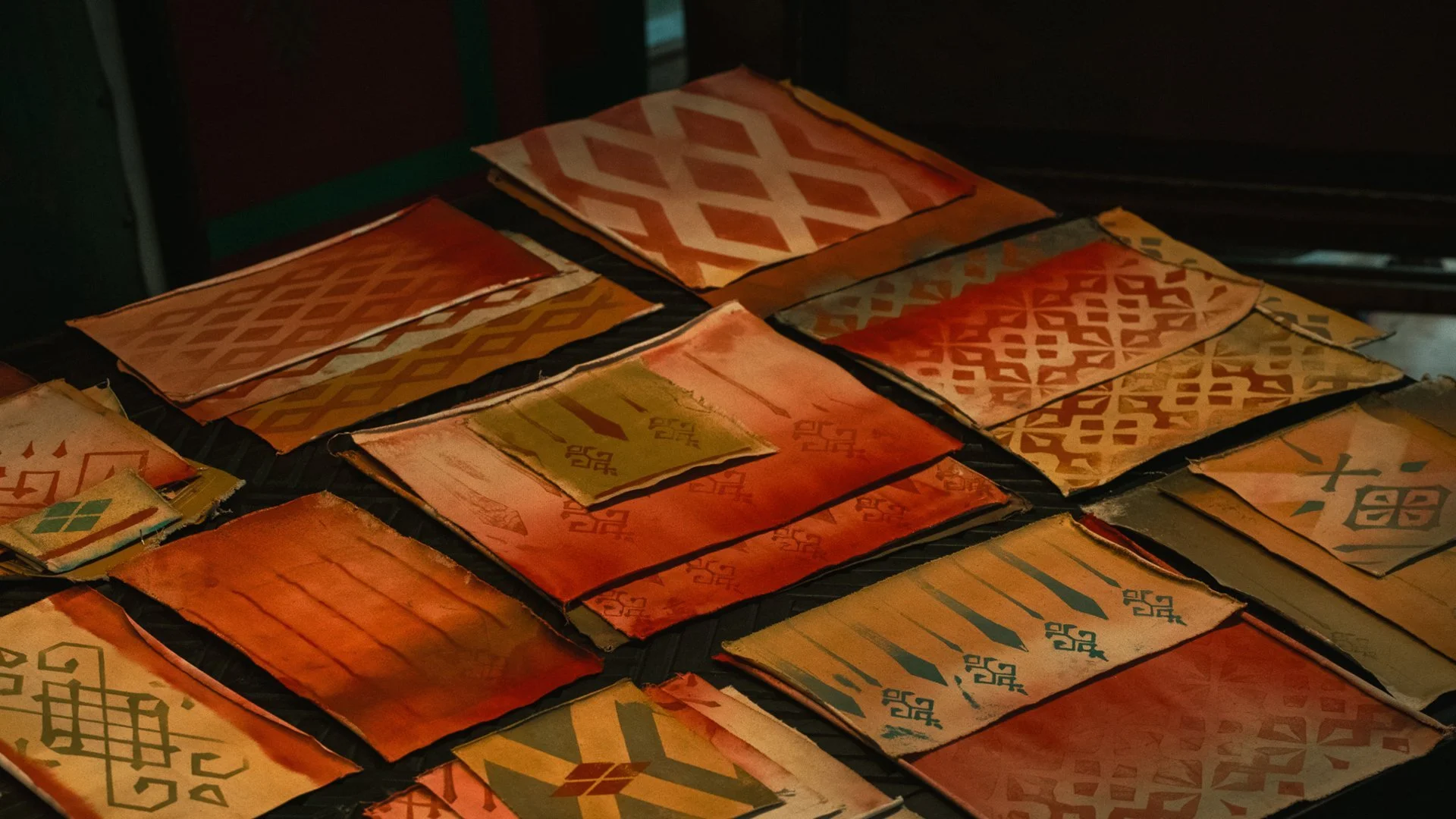
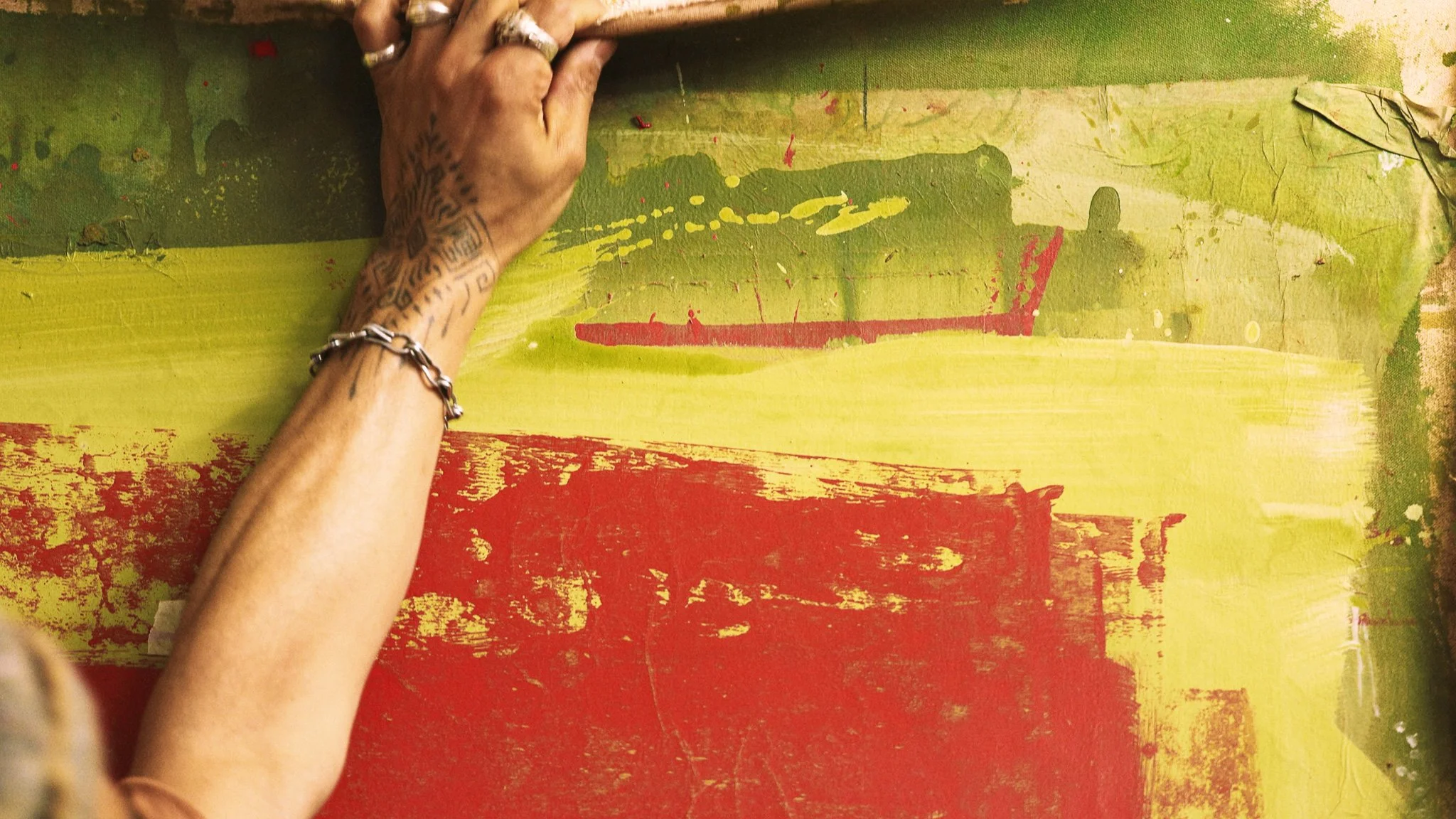
Before any of that, the canvas is stretched and then painted and washed over and over, twenty times, more, with dyes and water until the colour is no longer a colour I chose but something that happened. That flooding is the reality of the piece: fluid, impermanent, out of my control.
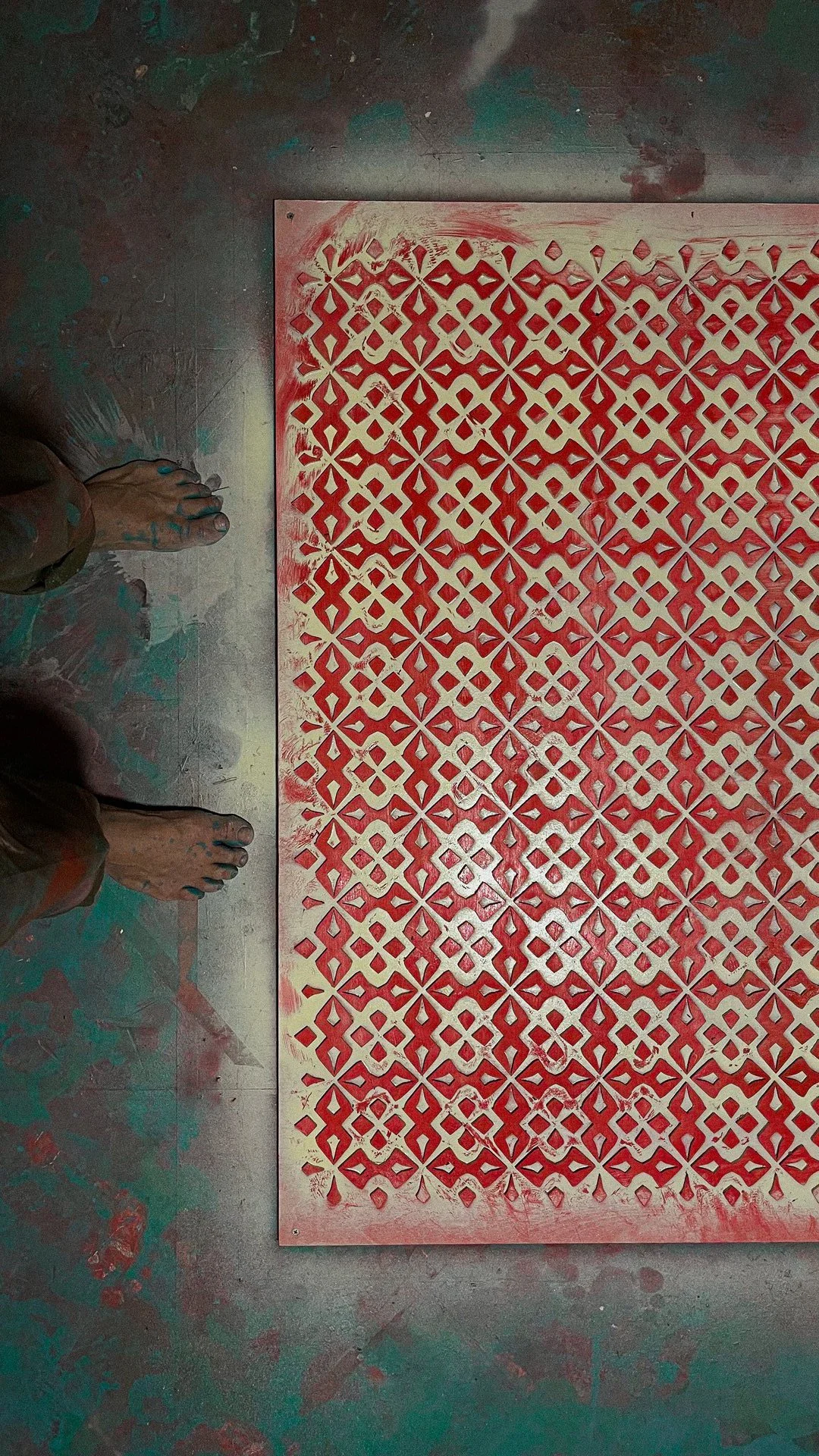
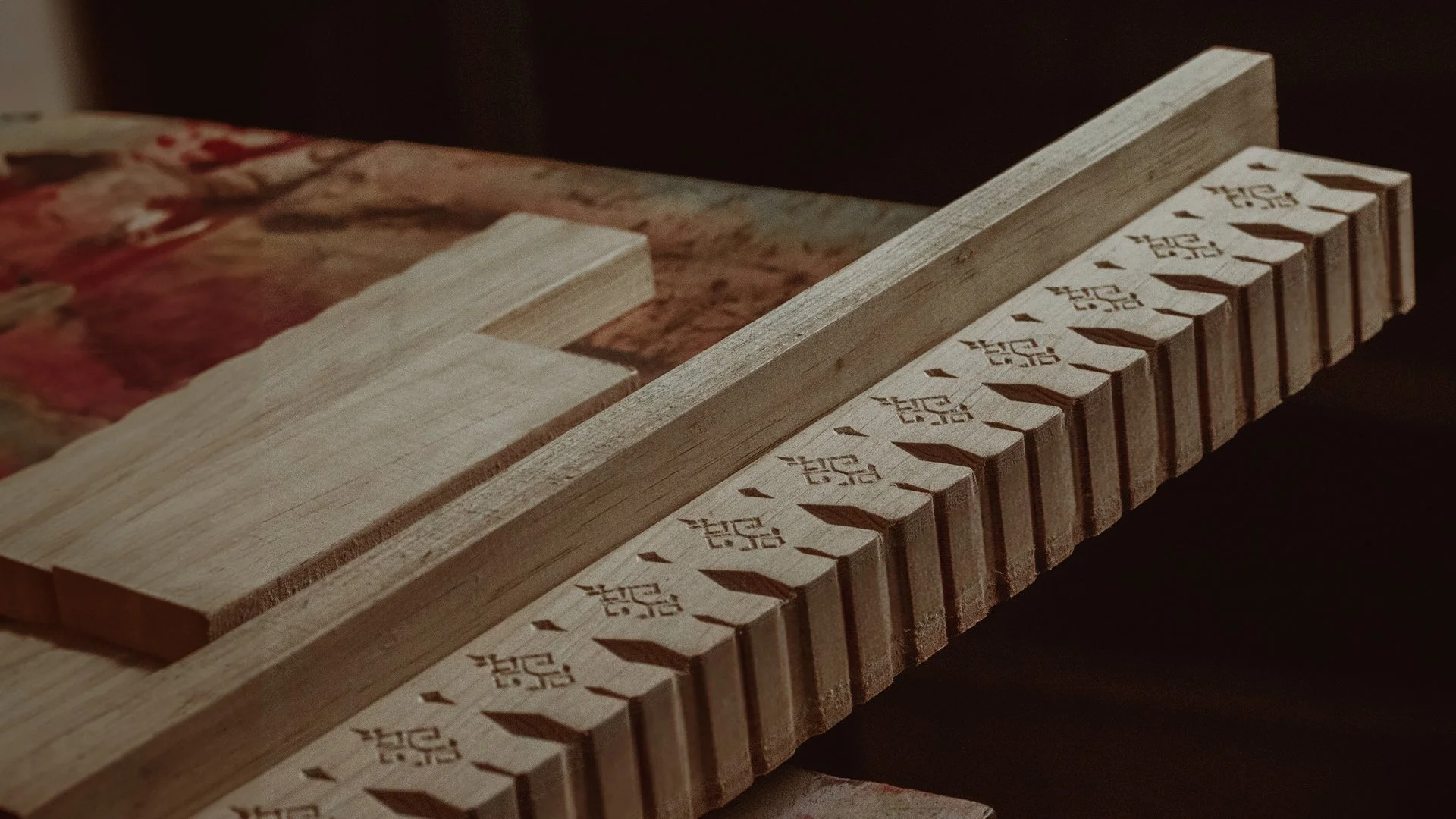
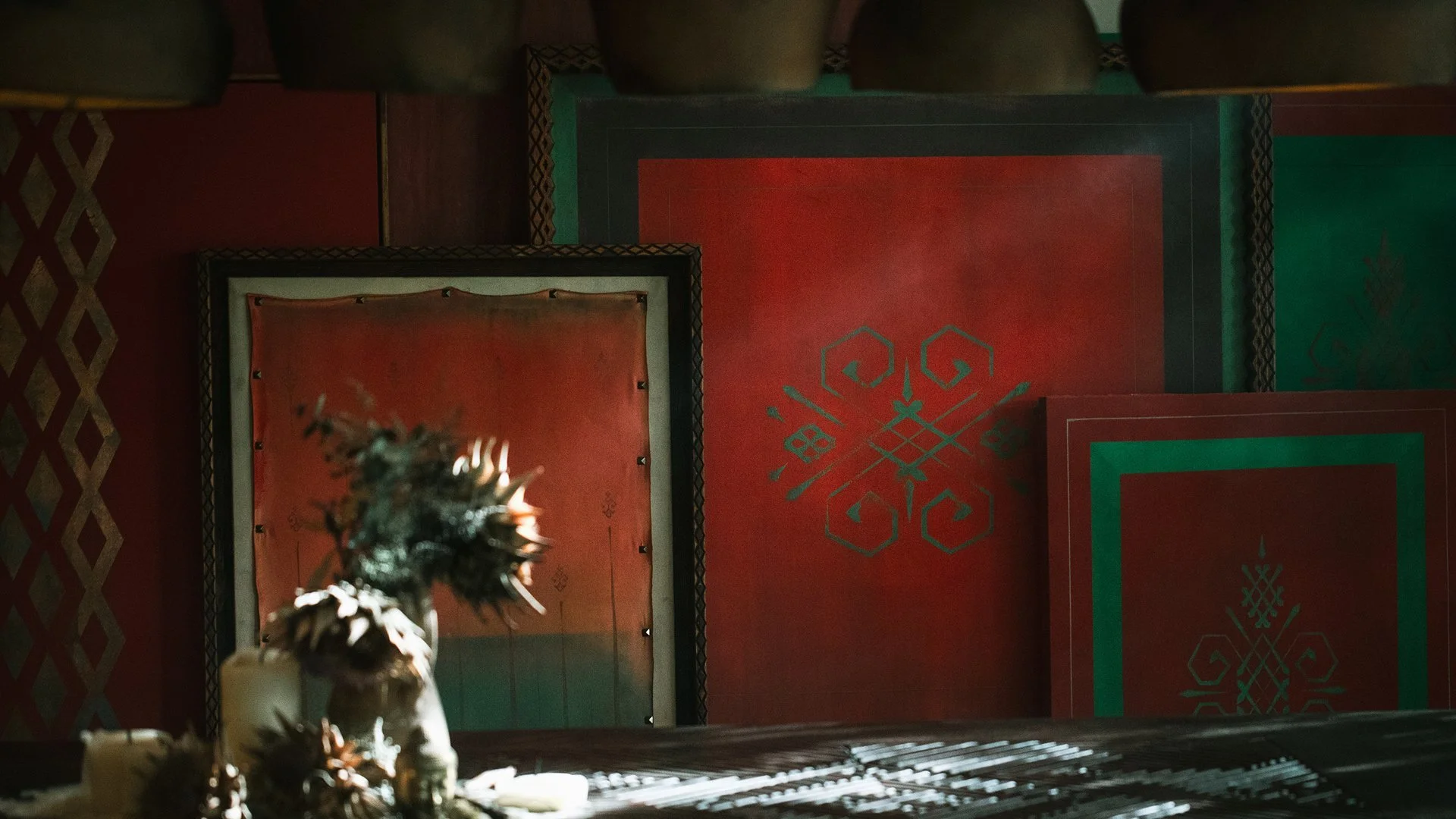
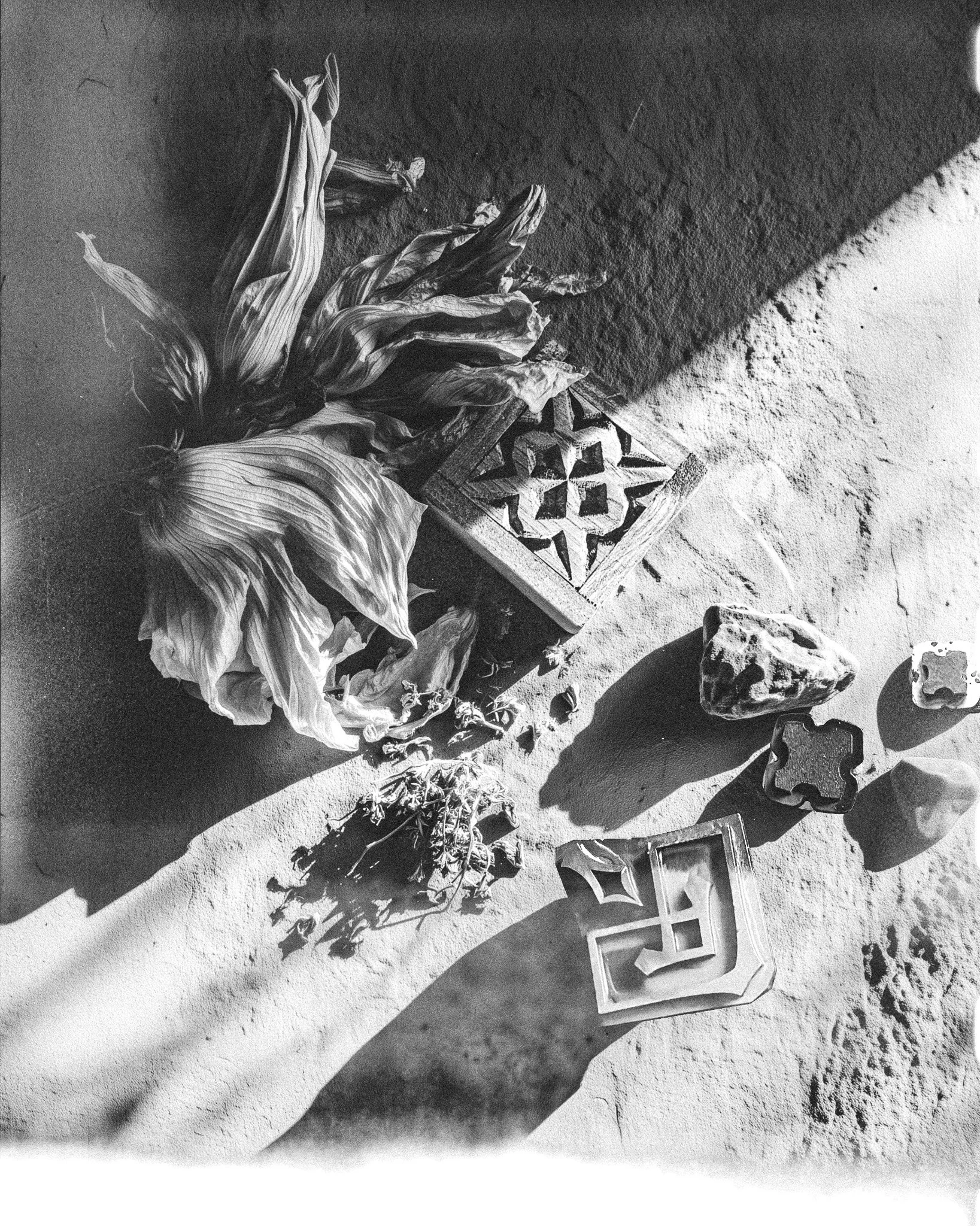
Then the symbols. Hand-carved into wood, stamped in oil, placed with total discipline onto a ground that had none. Those are the virtues we integrate when we stop resisting and accept.
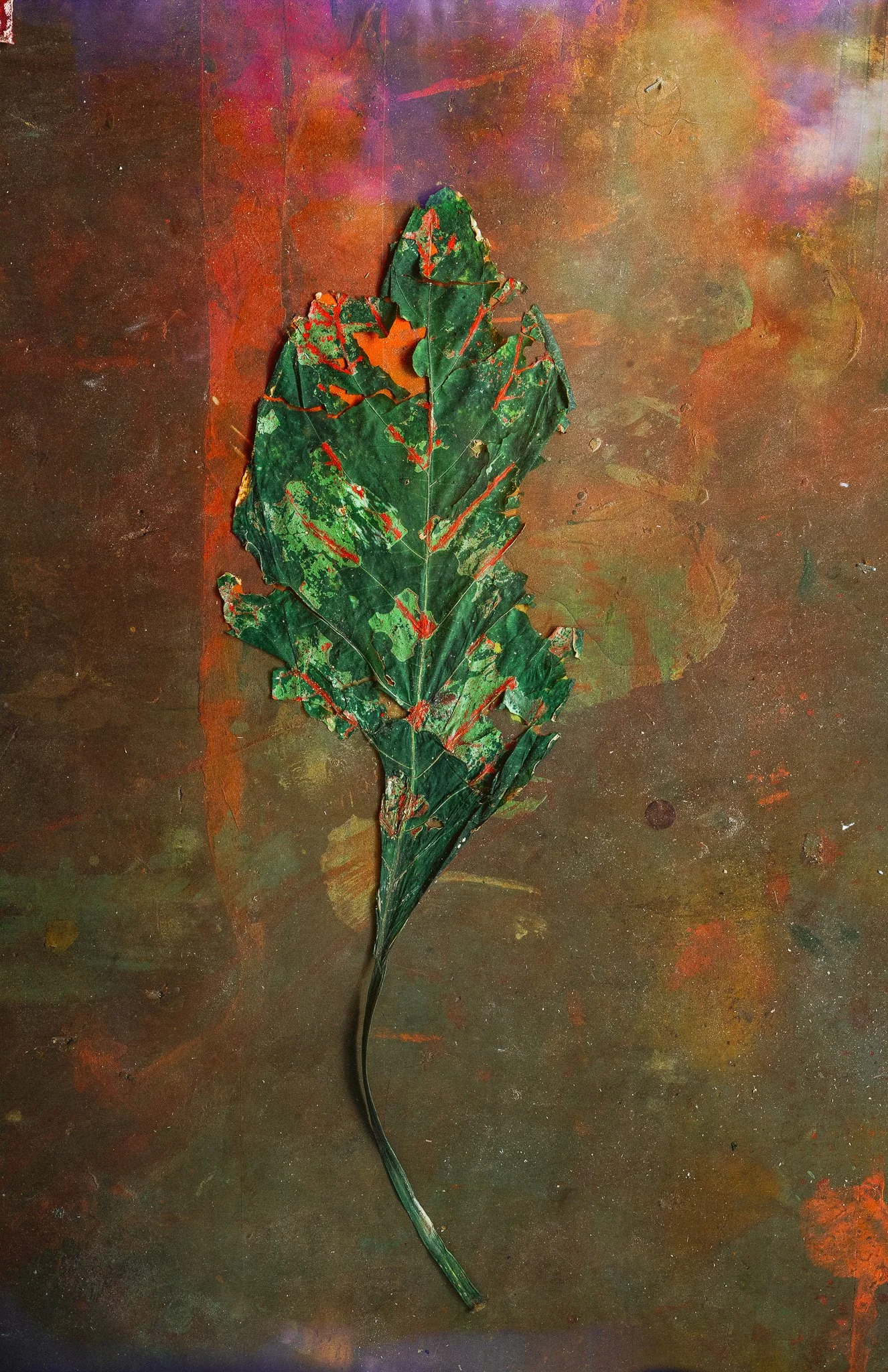
Reds carry pain and love. Greens carry surrender and healing.
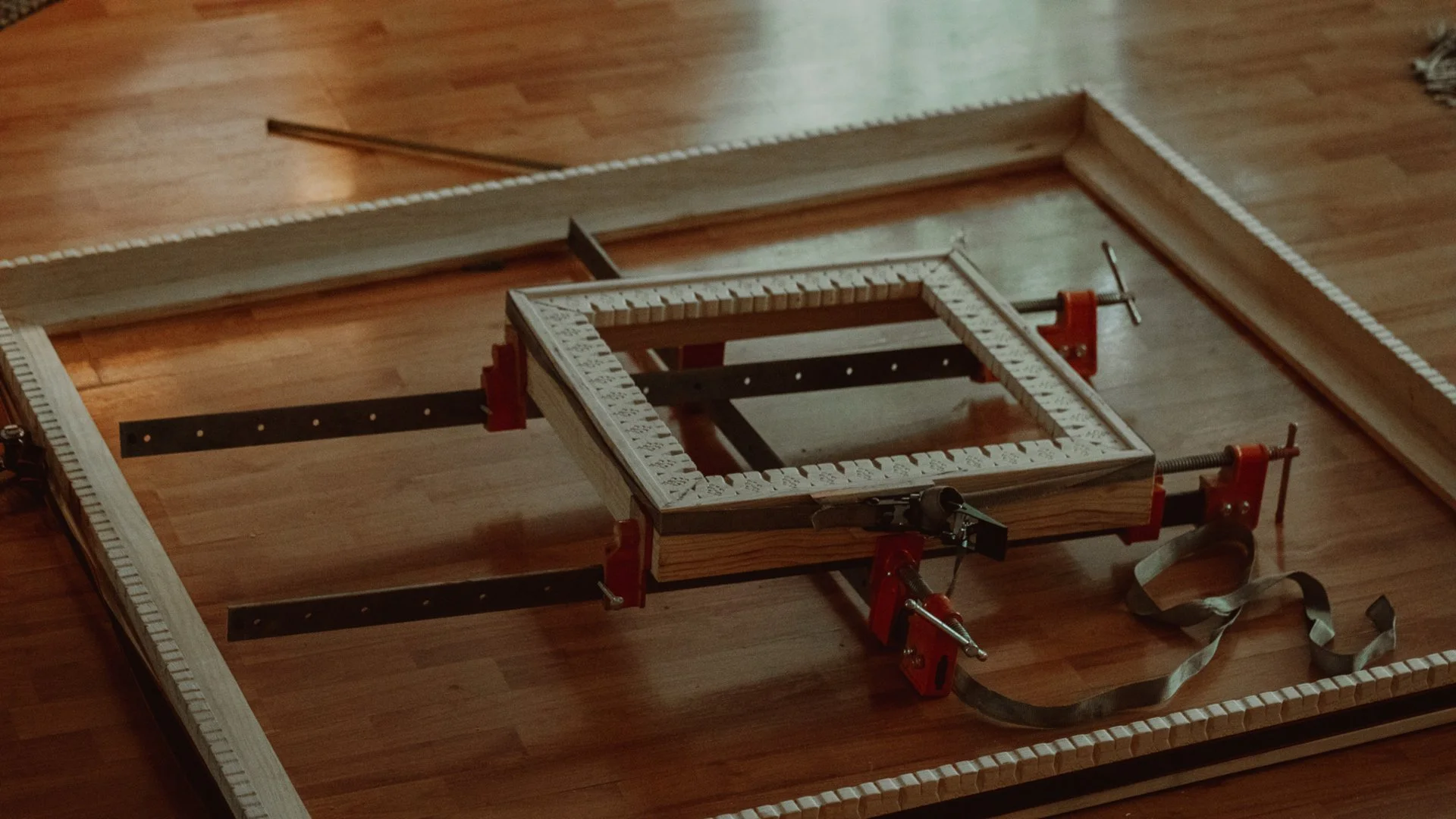
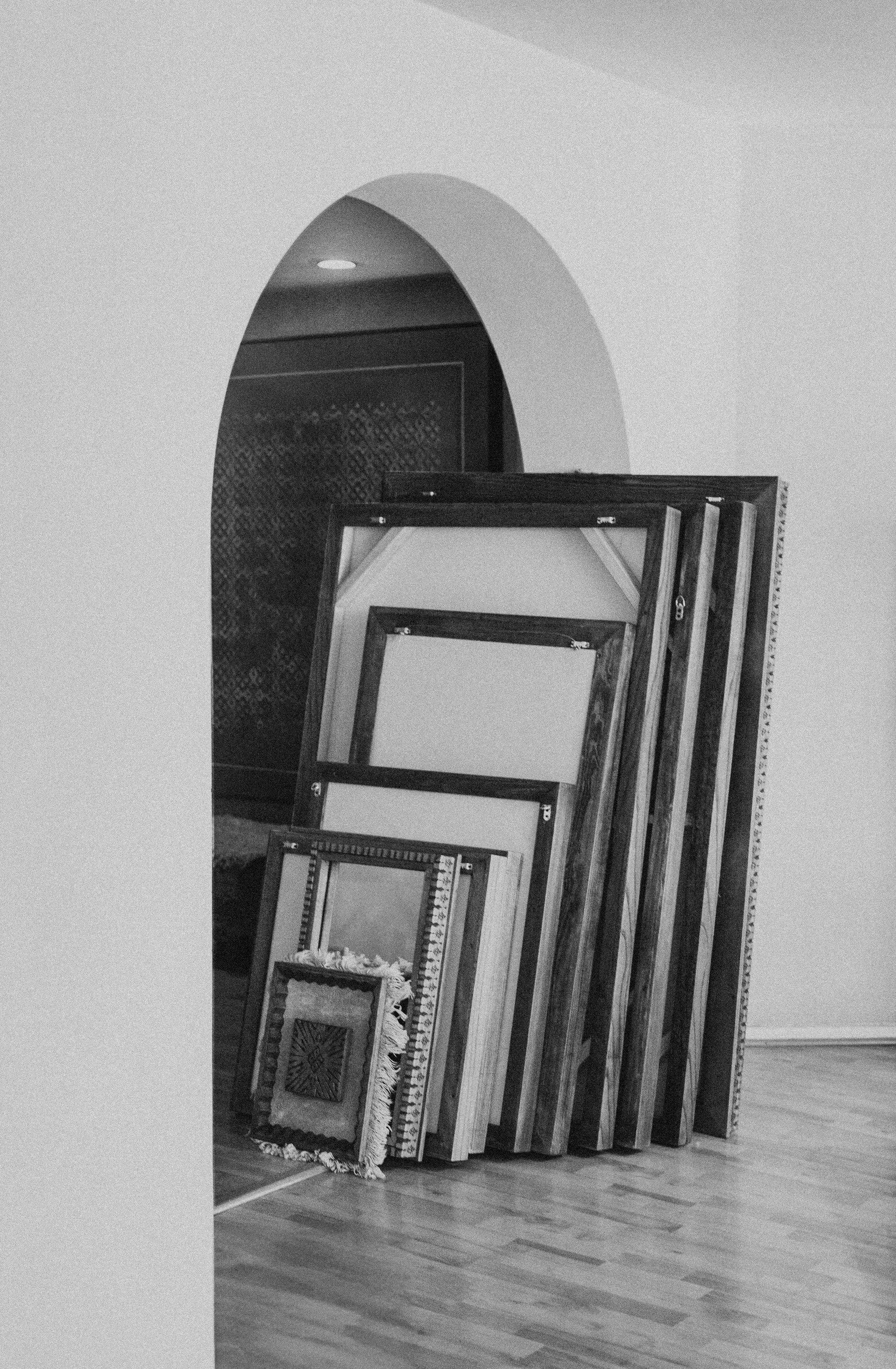
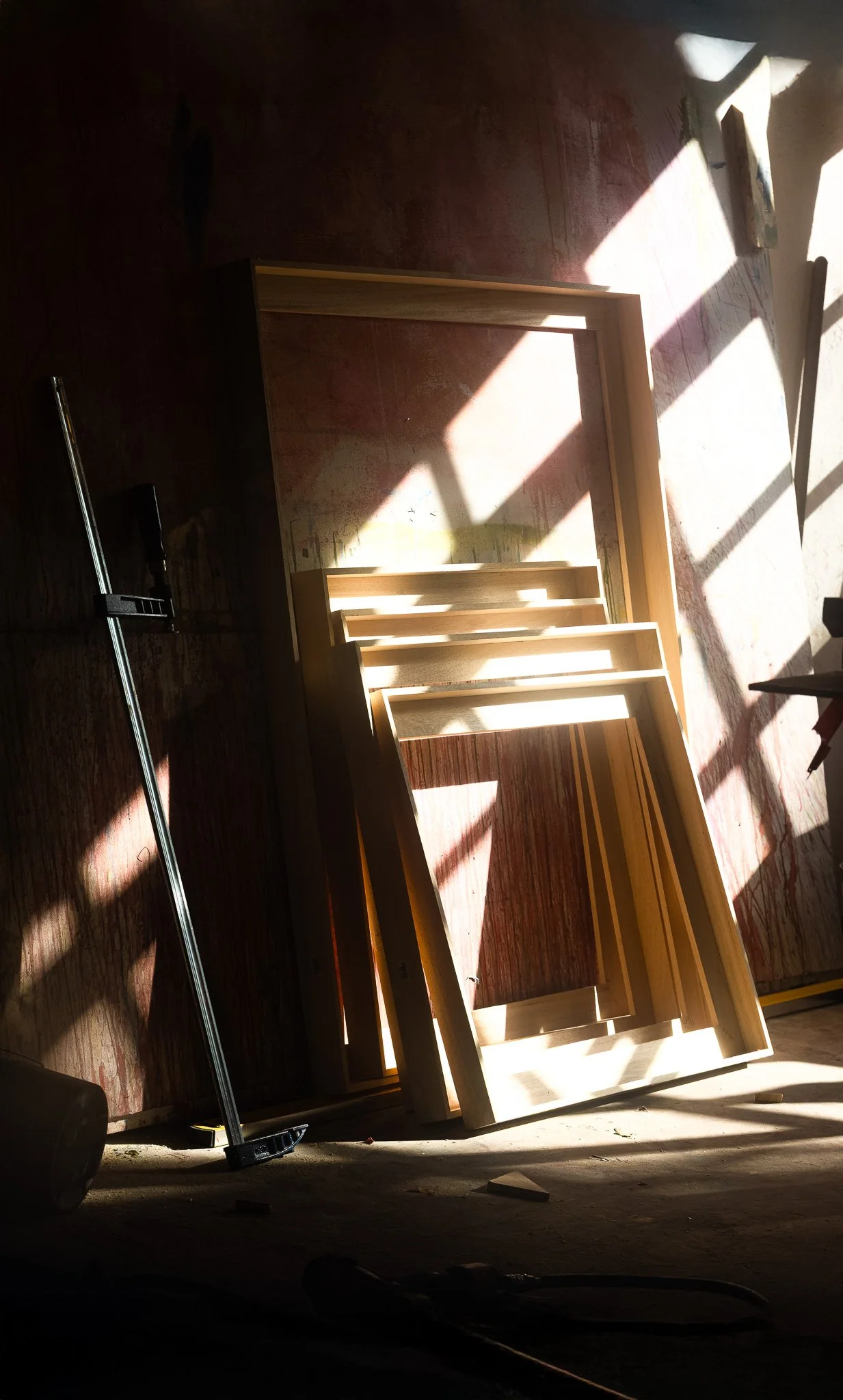
The frames are part of the work, not around it, carved by hand with yantras running the perimeter of every piece.